Tinsukia Medical College & Hospital, Assam: Complete Guide to MBBS Admission, Fees, NEET Cutoff, Courses, Hostel & Campus Life (2026)
Rashi Goyal
 WhatsApp
 Email
Email Facebook
 Twitter/X
 LinkedIn
Table of Contents
Predict Your Rank Now
Enter your NEET score to get an estimated rank
Find the Best Colleges For You
Based on your NEET rank, Category & more

Get Your Dream Medical College
Secure your seat with expert counselling
Introduction
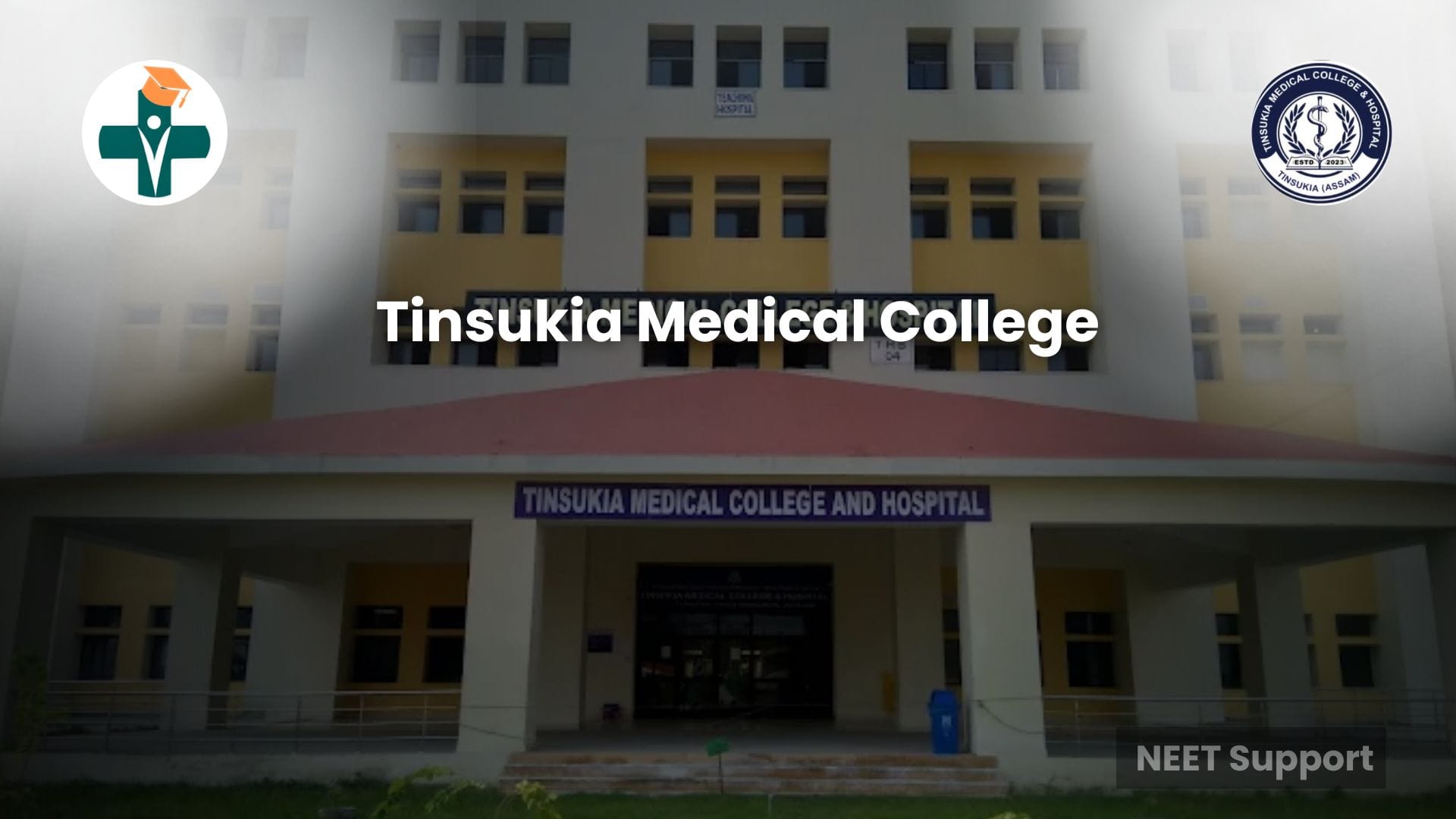
Tinsukia Medical College & Hospital (TMCH), Tinsukia, is one of the newest government medical colleges in Assam, established with the vision of expanding quality medical education and healthcare facilities in the northeastern region of India. Located in Makum, Tinsukia district, the college has been developed to provide modern medical education along with advanced healthcare services to the people of Upper Assam.
The establishment of Tinsukia Medical College marks an important step in strengthening the healthcare infrastructure of Assam. As the demand for trained doctors and specialized medical services continues to increase, the college aims to produce skilled healthcare professionals who can serve communities across Assam and other parts of India.
Affiliated with Srimanta Sankaradeva University of Health Sciences and recognized by the National Medical Commission, Tinsukia Medical College follows the Competency-Based Medical Education (CBME) curriculum prescribed for undergraduate medical education.
The college currently offers the MBBS programme with an annual intake of 100 students, providing aspiring doctors an opportunity to study medicine in a government medical institution with affordable fees and modern facilities.
History of Tinsukia Medical College & Hospital
Tinsukia Medical College & Hospital was established as part of the Assam Government’s initiative to increase the number of medical colleges in the state and improve healthcare accessibility.
Before the establishment of TMCH, students from Upper Assam had to travel to cities like Dibrugarh, Guwahati, and other regions for advanced medical education and healthcare services. The creation of Tinsukia Medical College helped reduce this gap by bringing medical education closer to students from eastern Assam.
The college is located at Makum in Tinsukia district and functions under the Department of Health and Family Welfare, Government of Assam. It is recognized as the 13th medical college in Assam and began its MBBS programme with an approved capacity of 100 undergraduate seats.
The institution has been designed with modern academic blocks, laboratories, a teaching hospital, and residential facilities to provide students with a complete medical learning environment.
Recognition and Affiliation
Tinsukia Medical College & Hospital is a government medical college recognized by the National Medical Commission (NMC). The college is affiliated with Srimanta Sankaradeva University of Health Sciences, Guwahati, which is responsible for conducting examinations and awarding the MBBS degree.
The MBBS programme follows the latest CBME guidelines, which focus on:
- Clinical skills development
- Patient communication
- Ethical medical practice
- Practical learning
- Community healthcare exposure
The curriculum combines classroom teaching, laboratory training, clinical postings, and internship experience.
Campus and Infrastructure
Tinsukia Medical College has been developed with modern infrastructure facilities required for undergraduate medical education.
The campus includes:
- Academic block
- Lecture theatres
- Department buildings
- Laboratories
- Central library
- Administrative offices
- Student facilities
- Hostel buildings
- Teaching hospital
The infrastructure has been planned according to NMC requirements to provide students with a comfortable and effective learning environment.
Academic Facilities
Lecture Theatres
The college has spacious lecture halls equipped with modern teaching facilities. These classrooms support interactive learning through:
- Audio-visual systems
- Digital presentations
- Smart teaching methods
- Faculty-led discussions
Medical education requires strong theoretical knowledge, and these facilities help students understand complex medical concepts effectively.
Central Library
The central library serves as an important learning resource for MBBS students.
The library provides access to:
- Medical textbooks
- Reference books
- National journals
- International medical publications
- Digital learning resources
- Reading rooms
Students can use library resources for:
- Academic preparation
- Research activities
- Clinical learning
- Competitive examinations
Laboratory Facilities
Practical training is a major component of MBBS education. Tinsukia Medical College has dedicated laboratories for various medical subjects.
Major laboratories include:
- Anatomy Laboratory
- Physiology Laboratory
- Biochemistry Laboratory
- Pathology Laboratory
- Microbiology Laboratory
- Pharmacology Laboratory
- Forensic Medicine Laboratory
These laboratories help students develop practical skills and understand medical concepts through hands-on learning.
Teaching Hospital Facilities
The attached hospital provides clinical exposure to MBBS students while delivering healthcare services to patients.
The hospital includes facilities such as:
- Outpatient Department (OPD)
- Inpatient Departments
- Emergency Services
- Operation Theatres
- Diagnostic Services
- Pharmacy
- Blood Bank
- Intensive Care Facilities
During clinical postings, students learn patient management under the guidance of experienced doctors and faculty members. The teaching hospital allows students to gain exposure to different medical conditions and understand real-world healthcare challenges.
Courses Offered at Tinsukia Medical College
Currently, Tinsukia Medical College offers the following courses:
| Course | Duration | Intake |
|---|---|---|
| MBBS | 5.5 Years (4.5 Years Academic + 1 Year Internship) | 100 Seats |
At present, postgraduate courses such as MD, MS, DM, M.Ch., nursing, and paramedical programmes have not been introduced. Future expansion may include postgraduate medical courses after receiving necessary approvals.
MBBS Course Details
The Bachelor of Medicine and Bachelor of Surgery (MBBS) programme prepares students to become qualified medical professionals.
Course Duration
The MBBS course consists of:
- 4.5 years of academic study
- 1 year compulsory rotating internship
Total duration: 5.5 years
Subjects Covered in MBBS
The curriculum includes three major phases:
Pre-Clinical Subjects
- Anatomy
- Physiology
- Biochemistry
Para-Clinical Subjects
- Pathology
- Pharmacology
- Microbiology
- Forensic Medicine
- Community Medicine
Clinical Subjects
- General Medicine
- General Surgery
- Pediatrics
- Obstetrics and Gynaecology
- Orthopaedics
- Ophthalmology
- ENT
- Dermatology
- Psychiatry
- Radiology
- Anaesthesiology
MBBS Seat Intake
Tinsukia Medical College has an annual intake of:
| Course | Number of Seats |
|---|---|
| MBBS | 100 |
The seats are filled through:
- 15% All India Quota
- 85% Assam State Quota
Admission is conducted through NEET-UG counselling.
Admission Process
Admission to Tinsukia Medical College is based on performance in the National Eligibility cum Entrance Test (NEET-UG).
The admission process includes:
- Appearing for the NEET-UG examination.
- Qualifying according to category requirements.
- Registering for counselling.
- Choice filling and seat allotment.
- Document verification.
- Fee payment.
- Reporting to the college.
For Assam state quota admissions, candidates must fulfill domicile requirements and submit required documents during counselling.
Academic Departments at Tinsukia Medical College
Tinsukia Medical College & Hospital has established various pre-clinical, para-clinical, and clinical departments required for conducting the MBBS programme as per National Medical Commission (NMC) guidelines. The departments are designed to provide students with strong theoretical knowledge, practical skills, and clinical exposure.
The major departments include:
Pre-Clinical Departments
Department of Anatomy
The Department of Anatomy introduces students to the structure and organization of the human body. Students learn through:
- Dissection sessions
- Histology practicals
- Embryology studies
- Anatomy demonstrations
- Museum learning
This department forms the foundation for understanding medical sciences.
Department of Physiology
The Physiology department focuses on the normal functioning of the human body.
Students study:
- Cardiovascular physiology
- Respiratory physiology
- Nervous system
- Endocrine system
- Blood physiology
- Practical physiology experiments
Department of Biochemistry
This department helps students understand the chemical processes occurring inside the human body.
Important areas include:
- Metabolism
- Enzymes
- Molecular biology
- Clinical biochemistry
- Laboratory investigations
Para-Clinical Departments
Department of Pathology
Pathology helps students understand diseases and their effects on body tissues and organs.
Students learn:
- Histopathology
- Blood investigations
- Disease diagnosis
- Laboratory techniques
Department of Pharmacology
The department teaches students about medicines, drug actions, and safe prescribing practices.
Topics include:
- Drug mechanisms
- Dosage
- Side effects
- Clinical pharmacology
Department of Microbiology
Students study microorganisms responsible for diseases.
Major areas include:
- Bacteriology
- Virology
- Immunology
- Infection control
Department of Forensic Medicine
This department introduces students to medical laws, forensic investigations, and medico-legal procedures.
Department of Community Medicine
Community Medicine focuses on public health and preventive healthcare.
Students participate in:
- Health awareness programmes
- Rural health activities
- Disease prevention campaigns
- Epidemiological studies
Clinical Departments
During clinical years, students receive training in hospital departments.
Major clinical departments include:
- General Medicine
- General Surgery
- Pediatrics
- Obstetrics and Gynaecology
- Orthopaedics
- Ophthalmology
- ENT
- Dermatology
- Psychiatry
- Anaesthesiology
- Radiology
These departments provide students with direct patient interaction and clinical learning.
Faculty and Teaching Methodology
Tinsukia Medical College has recruited qualified teaching professionals including:
- Professors
- Associate Professors
- Assistant Professors
- Tutors
- Senior Residents
The faculty members guide students through different stages of medical education, from basic sciences to advanced clinical training.
The teaching approach follows the Competency-Based Medical Education (CBME) pattern, which focuses on developing:
- Clinical skills
- Communication abilities
- Decision-making skills
- Professional ethics
- Patient-care approach
Teaching methods include:
- Classroom lectures
- Practical sessions
- Seminars
- Group discussions
- Case presentations
- Clinical demonstrations
- Bedside teaching
Clinical Training at Tinsukia Medical College Hospital
Clinical exposure is one of the most important parts of MBBS education.
The attached teaching hospital allows students to understand real patient conditions and develop practical medical skills.
Students receive training in:
- Patient history taking
- Physical examination
- Diagnosis
- Treatment planning
- Emergency management
- Patient counselling
Clinical postings begin during the later years of MBBS and continue throughout internship. The hospital provides exposure to various departments, allowing students to understand different specialties and healthcare challenges.
Internship Programme
After completing the academic portion of MBBS, students must complete a compulsory one-year rotating internship.
During the internship, students work in different departments including:
- Medicine
- Surgery
- Pediatrics
- Obstetrics and Gynaecology
- Community Medicine
- Emergency Services
The internship helps students gain confidence in patient management and prepares them for medical practice.
After completing the internship, graduates can apply for medical registration and pursue further career opportunities.
Research Opportunities
As a developing medical institution, Tinsukia Medical College aims to promote medical research and innovation.
Future research activities may include:
- Community health studies
- Clinical research
- Infectious disease research
- Public health projects
- Epidemiological studies
Medical students may participate in:
- Research projects
- Medical conferences
- Poster presentations
- Academic seminars
Research exposure helps students develop analytical skills and understand advancements in healthcare.
Hostel Facilities at Tinsukia Medical College
The college provides residential facilities for students.
The planned infrastructure includes separate hostels for:
- Boys
- Girls
- Resident doctors
- Nursing staff
The project infrastructure includes boys' and girls' hostels designed to accommodate undergraduate students along with facilities for resident doctors and nurses.
Hostel facilities generally include:
- Furnished rooms
- Study tables
- Common areas
- Mess facilities
- Security arrangements
- Water and electricity supply
- Recreational facilities
Hostel accommodation allows students to stay close to academic buildings and hospitals, making clinical postings more convenient.
Library and Digital Learning Facilities
The medical college provides library facilities to support students throughout their MBBS journey.
The library includes:
- Medical textbooks
- Reference materials
- Journals
- Digital resources
- Reading spaces
Students can use these resources for:
- University examinations
- NEET-PG preparation
- Research activities
- Clinical learning
The availability of digital learning resources helps students stay updated with modern medical practices.
Student Life at Tinsukia Medical College
Student life at Tinsukia Medical College combines academics, clinical training, and extracurricular activities.
Students can participate in:
- Cultural programmes
- Sports activities
- Medical seminars
- Health awareness camps
- Quiz competitions
- Workshops
- College events
Medical education requires discipline and dedication, but activities outside academics help students develop teamwork and leadership skills.
The peaceful environment of Tinsukia provides students with a comfortable atmosphere for focused learning.
Community Healthcare Activities
Community healthcare is an important part of MBBS education.
Students participate in public health programmes organized through the Department of Community Medicine.
Activities include:
- Rural health camps
- Awareness programmes
- Vaccination drives
- Screening camps
- Health education sessions
These activities help students understand healthcare needs at the grassroots level.
Career Opportunities After MBBS
Graduates from Tinsukia Medical College will have several career opportunities after completing their MBBS degree.
Career options include:
Government Medical Services
Students can work as:
- Medical Officers
- Doctors in government hospitals
- Public health professionals
Higher Education
Many graduates prepare for:
- NEET-PG
- MD/MS specializations
- Diploma courses
Popular specializations include:
- General Medicine
- Surgery
- Pediatrics
- Radiology
- Dermatology
- Orthopaedics
- Anaesthesia
Other Career Options
Graduates can also explore:
- Medical research
- Hospital administration
- Medical teaching
- Healthcare management
- International medical licensing examinations
Why Choose Tinsukia Medical College?
There are several reasons why students may consider Tinsukia Medical College for MBBS:
- Government medical college
- Affordable education
- NMC-recognized programme
- Modern infrastructure
- 100 MBBS seats
- Teaching hospital exposure
- Growing academic environment
- Location in Upper Assam
- Future expansion opportunities
Being a newly established medical college, Tinsukia Medical College offers students the opportunity to be part of a developing institution with modern facilities and future growth potential.
Tinsukia Medical College MBBS Fee Structure (2025–26)
Tinsukia Medical College & Hospital is a government medical college, making the MBBS programme significantly more affordable compared to private medical colleges. The fee structure is regulated by the Government of Assam and is designed to provide quality medical education at a reasonable cost.
The official undergraduate fee structure is as follows:
| Year | Tuition & Academic Fee |
|---|---|
| 1st Year MBBS | ₹24,000 |
| 2nd Year MBBS | ₹8,000 |
| 3rd Year MBBS | ₹8,000 |
| 4th Year MBBS | ₹8,000 |
| 5th Year MBBS | ₹8,000 |
Additional Charges
| Fee Component | Approximate Amount |
|---|---|
| Admission Fee | ₹24,000 |
| Counselling Fee | ₹1,000 |
| Hostel Mess Dues | ₹3,600 (as mentioned in fee details) |
The total cost of completing an MBBS degree at Tinsukia Medical College remains much lower than private medical institutions. Students should also consider additional expenses such as:
- Medical books
- Instruments
- Uniforms
- Examination fees
- Personal expenses
- Hostel and mess charges
Hostel Fee and Accommodation
Tinsukia Medical College provides hostel facilities for undergraduate students.
Hostel accommodation helps students stay close to academic buildings and the teaching hospital, making clinical postings and academic activities more convenient.
Hostel facilities generally include:
- Furnished rooms
- Study spaces
- Mess facilities
- Security arrangements
- Common areas
- Basic amenities
Students staying in hostels need to pay applicable hostel and mess charges according to college regulations.
Tinsukia Medical College NEET UG Cutoff 2025
Admission to Tinsukia Medical College is based on NEET-UG rank followed by counselling. Since it is a government medical college with limited seats, competition remains high.
The available NEET UG 2025 cutoff trends show the following closing ranks under the All India Quota:
| Category | Closing Rank (Approx.) |
|---|---|
| General (UR) | 25,898 |
| OBC | 25,957 |
Another reported cutoff dataset shows variation in closing rank depending on counselling rounds and categories.
The cutoff depends on several factors:
- NEET difficulty level
- Number of applicants
- Seat availability
- Category reservation
- Counselling rounds
- Candidate preferences
Expected NEET Score for Tinsukia Medical College
The expected NEET score required for admission may vary every year. Based on recent government medical college trends in Assam, candidates should aim for a competitive score.
| Category | Expected NEET Score Range |
|---|---|
| General | 650+ |
| EWS | 630–650 |
| OBC | 620–650 |
| SC | 500–570 |
| ST | 450–550 |
These figures are estimates and not official cutoff marks.
Reservation Policy
Seats at Tinsukia Medical College are allotted according to Government of India and Assam Government reservation policies.
Reservation categories generally include:
- Scheduled Caste (SC)
- Scheduled Tribe (ST)
- Other Backward Classes (OBC/MOBC)
- Economically Weaker Section (EWS)
- Persons with Disabilities (PwD)
Students applying under reserved categories must submit valid certificates during counselling and admission.
Scholarships Available for Students
Students of Tinsukia Medical College may be eligible for various scholarship schemes offered by government authorities.
Available scholarships may include:
National Scholarship Portal (NSP)
Students can apply for eligible central government scholarship schemes through NSP.
State Government Scholarships
Assam Government provides financial assistance schemes for eligible students belonging to different categories.
Category-Based Scholarships
Students may receive benefits under:
- SC scholarships
- ST scholarships
- OBC scholarships
- Minority scholarships
- EWS support schemes
Eligibility depends on:
- Family income
- Category
- Academic performance
- Government guidelines
Documents Required for MBBS Admission
Students must submit required documents during counselling and admission.
Important documents include:
- NEET UG admit card
- NEET scorecard
- Class 10 certificate
- Class 12 marksheet
- Class 12 passing certificate
- Permanent Residential Certificate (PRC)
- Category certificate (if applicable)
- Identity proof
- Passport-size photographs
- Medical fitness certificate
Frequently Asked Questions (FAQs)
Is Tinsukia Medical College a government medical college?
Yes, Tinsukia Medical College & Hospital is a government medical college established by the Government of Assam.
Which entrance exam is required for admission?
Admission is based on the NEET-UG examination followed by counselling.
Does Tinsukia Medical College offer postgraduate courses?
Currently, the college offers the MBBS programme. MD/MS and other postgraduate courses are expected to be introduced after necessary approvals and infrastructure development.
What is the annual MBBS fee?
The first-year MBBS fee is approximately ₹24,000, while subsequent years have lower academic fees as per the official fee structure.
Conclusion
Tinsukia Medical College & Hospital is an emerging centre for medical education in Assam, offering students an excellent opportunity to pursue MBBS in a government medical college with affordable fees and modern facilities. With 100 MBBS seats, NMC recognition, SSUHS affiliation, a teaching hospital, and growing infrastructure, the college provides a strong foundation for aspiring doctors. The affordable fee structure, quality education, clinical exposure, and location in Upper Assam make Tinsukia Medical College an attractive choice for NEET aspirants. As the institution continues to develop, it is expected to become one of the important medical education and healthcare centres in Northeast India.
Reviews
No reviews yet. Be the first to write one!