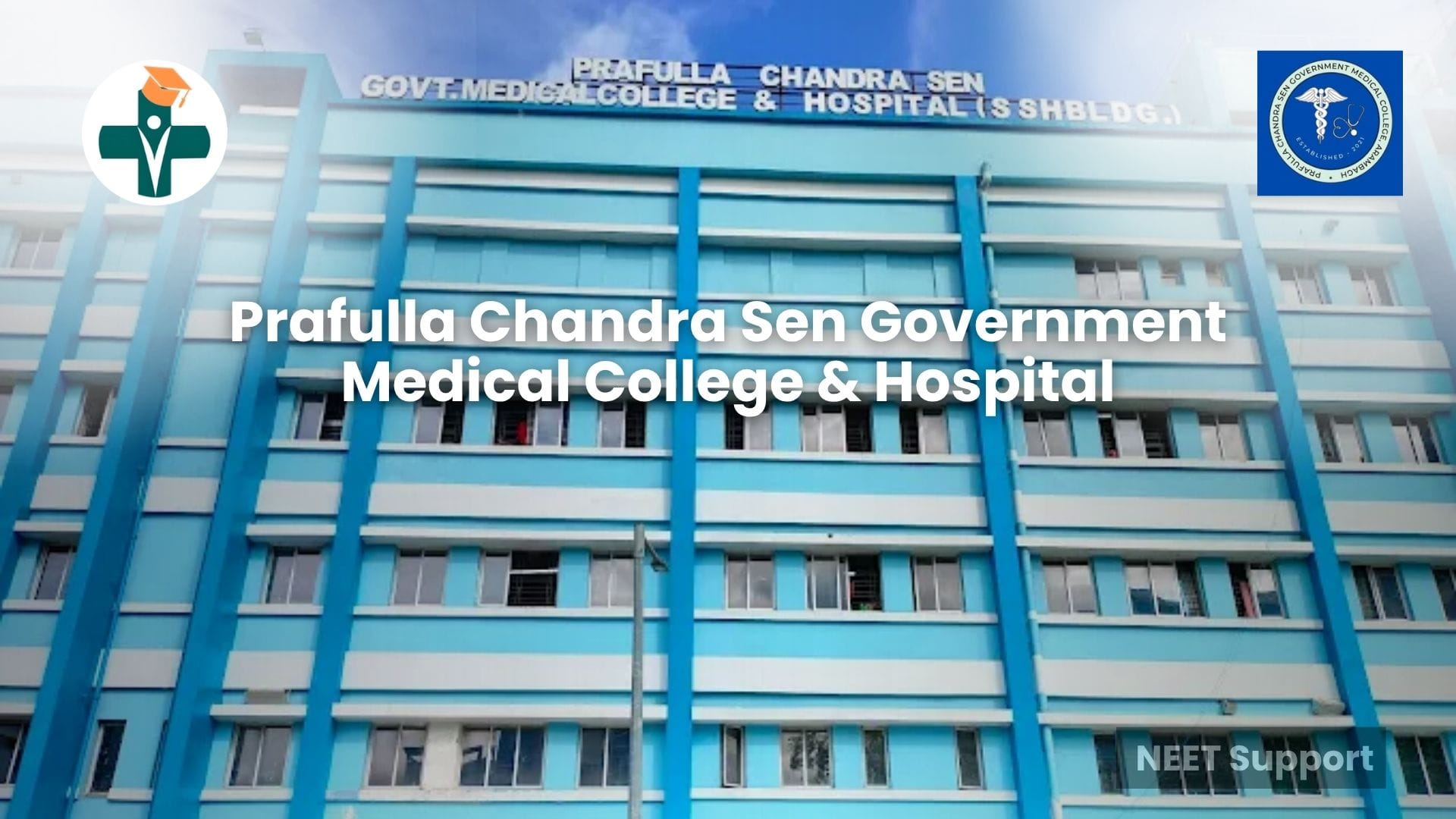
Prafulla Chandra Sen Government Medical College & Hospital, Arambagh, West Bengal: Complete MBBS Guide
Rashi Goyal
 WhatsApp
 Email
Email Facebook
 Twitter/X
 LinkedIn
Table of Contents
Predict Your Rank Now
Enter your NEET score to get an estimated rank
Find the Best Colleges For You
Based on your NEET rank, Category & more

Get Your Dream Medical College
Secure your seat with expert counselling
Introduction
Prafulla Chandra Sen Government Medical College & Hospital is one of the newest government medical colleges in the state of West Bengal. The college was established in the year 2022 by the Government of West Bengal with the objective of improving medical education and healthcare services in the Hooghly district and nearby rural areas. Since its establishment, the institution has gained recognition for offering quality medical education at a very affordable cost while providing students with modern academic facilities and practical clinical exposure.
The college is affiliated with the West Bengal University of Health Sciences (WBUHS) and is recognized by the National Medical Commission (NMC), which is the regulatory authority responsible for medical education in India. Admission to the MBBS course is conducted only through the National Eligibility cum Entrance Test (NEET-UG). Students from across India can apply through the All India Quota (AIQ), while candidates belonging to West Bengal can also participate in the State Quota counselling process.
Being a government medical college, the institution provides high-quality education with a very low tuition fee compared to private medical colleges. This makes it one of the preferred choices for NEET aspirants who wish to pursue MBBS at an affordable cost without compromising on academic quality. Along with academic excellence, the college also focuses on practical learning, patient care, medical ethics, and research-oriented education.
History and Establishment
The Government of West Bengal established Prafulla Chandra Sen Government Medical College & Hospital in 2022 as part of its initiative to expand medical education and improve healthcare infrastructure throughout the state. The college is named after Shri Prafulla Chandra Sen, the former Chief Minister of West Bengal, who was widely respected for his dedication to public welfare and rural development.
Before the establishment of this institution, students from Hooghly district had limited access to government medical education. Many aspiring doctors had to move to distant cities for pursuing MBBS studies. The creation of this college not only increased the number of government MBBS seats in the state but also strengthened healthcare facilities for the local population.
Although the institution is relatively new, continuous investment by the state government has resulted in the development of modern academic buildings, laboratories, hospital facilities, hostels, and other infrastructure necessary for quality medical education. Every year, additional facilities are being added to improve the learning environment for students.
College Overview
| Particular | Details |
|---|---|
| College Name | Prafulla Chandra Sen Government Medical College & Hospital |
| Established | 2022 |
| College Type | Government |
| Location | Arambagh, Hooghly, West Bengal |
| Affiliated University | West Bengal University of Health Sciences |
| Approved By | National Medical Commission (NMC) |
| Course Offered | MBBS |
| Duration | 5.5 Years |
| Internship | 1 Year Compulsory |
| Admission | NEET-UG |
| Counselling | MCC (15% AIQ) & WBMCC (85% State Quota) |
| Annual Intake | 100 MBBS Seats |
Location and Campus
The college is located in Arambagh, a developing town in the Hooghly district of West Bengal. The campus has been designed with modern educational standards in mind and provides a peaceful environment suitable for academic learning. Away from the crowded metropolitan cities, students can focus on their studies while receiving sufficient clinical exposure through the attached teaching hospital.
The campus includes academic blocks, lecture halls, laboratories, museums, a central library, hospital buildings, administrative offices, boys' and girls' hostels, cafeteria, sports facilities, and residential quarters for faculty members. Wide internal roads, greenery, and proper security arrangements create a comfortable atmosphere for both students and staff.
Recognition and Affiliation
The college is recognized by the National Medical Commission (NMC), ensuring that the MBBS degree awarded by the institution is valid throughout India. Students graduating from this college become eligible to register with the National Medical Commission after completing their internship and can practice medicine anywhere in the country according to prevailing regulations.
The institution is affiliated with the West Bengal University of Health Sciences (WBUHS), which conducts examinations, prepares the academic curriculum, and awards degrees to successful students. The university follows the Competency-Based Medical Education (CBME) curriculum prescribed by the National Medical Commission.
Courses Offered
Currently, the college offers only the MBBS undergraduate programme.
| Course | Duration | Intake |
|---|---|---|
| MBBS | 4.5 Years + 1 Year Internship | 100 Seats |
The MBBS course is divided into different professional phases that include pre-clinical, para-clinical, and clinical subjects. During the final year and internship, students receive extensive practical exposure through patient care in various hospital departments.
In the coming years, postgraduate medical courses (MD/MS) may also be introduced as the institution continues to expand.
MBBS Course Structure
The MBBS programme follows the latest Competency-Based Medical Education curriculum recommended by the National Medical Commission.
During the first professional year, students study Anatomy, Physiology, and Biochemistry. These subjects build a strong foundation for understanding the structure and functioning of the human body.
The second professional year introduces students to Pathology, Pharmacology, Microbiology, and Forensic Medicine. These subjects help students understand diseases, medicines, microorganisms, and medico-legal aspects of healthcare.
The third professional year focuses on Community Medicine along with the beginning of clinical postings where students start interacting with patients under faculty supervision.
The final professional year includes Medicine, Surgery, Obstetrics and Gynaecology, Paediatrics, Orthopaedics, ENT, Ophthalmology, Psychiatry, Dermatology, Anaesthesia, and Radiology. Students spend a significant amount of time in hospital wards learning diagnosis, treatment planning, and patient management.
After completing all professional examinations, students undergo a compulsory one-year rotating internship.
Eligibility Criteria
Candidates seeking admission to the MBBS programme must fulfill the following eligibility conditions.
The applicant should have completed Class 12 or equivalent examination with Physics, Chemistry, Biology/Biotechnology, and English as compulsory subjects.
General category candidates should obtain at least 50% marks in PCB subjects, while SC, ST, and OBC candidates require a minimum of 40% marks as per National Medical Commission guidelines. Candidates belonging to the Persons with Disabilities category receive relaxation according to government rules.
The minimum age for admission is 17 years as on 31st December of the admission year.
Every applicant must qualify the National Eligibility cum Entrance Test (NEET-UG), which serves as the single entrance examination for admission to MBBS courses across India.
Admission Process
Admission to Prafulla Chandra Sen Government Medical College & Hospital is completely based on the NEET-UG examination. There is no separate entrance test conducted by the college.
After the declaration of NEET results, eligible candidates participate in the counselling process. Fifteen percent of the total MBBS seats are filled through the All India Quota counselling conducted by the Medical Counselling Committee (MCC). The remaining eighty-five percent seats are filled through the West Bengal State Medical Counselling conducted by the West Bengal Medical Counselling Committee (WBMCC).
During counselling, candidates register online, fill in their preferred colleges, upload the required documents, and lock their choices. Seat allotment depends on NEET rank, category, reservation policy, availability of seats, and the choices filled by the candidate.
Students allotted a seat in the college must report to the institution within the specified period along with original documents for verification and payment of admission fees. After successful verification, the admission process is completed.
Documents Required
Candidates must produce the following documents during admission.
- NEET Admit Card
- NEET Score Card
- Allotment Letter
- Class 10 Marksheet and Certificate
- Class 12 Marksheet and Certificate
- Transfer Certificate
- Migration Certificate (if applicable)
- Character Certificate
- Aadhaar Card
- Passport-size Photographs
- Category Certificate (if applicable)
- EWS Certificate (if applicable)
- PwD Certificate (if applicable)
- Domicile Certificate for State Quota candidates
All original documents along with photocopies are generally required during the admission process.
Academic Facilities
The college provides modern academic facilities that support quality medical education. Spacious lecture theatres are equipped with audio-visual teaching aids, smart classroom technology, microphones, projectors, and digital presentation systems. Faculty members combine classroom teaching with practical demonstrations, case discussions, seminars, and problem-based learning methods.
The institution follows the Competency-Based Medical Education curriculum, where equal importance is given to theoretical knowledge, clinical skills, communication abilities, ethics, professionalism, and patient-centered care.
Regular internal assessments, practical examinations, tutorials, seminars, and group discussions help students evaluate their progress throughout the academic year.
Departments
The college has well-established departments for both basic and clinical sciences.
The pre-clinical departments include Anatomy, Physiology, and Biochemistry. These departments are equipped with dissection halls, museums, laboratories, and demonstration rooms where students develop their fundamental understanding of human anatomy and physiology.
The para-clinical departments include Pathology, Pharmacology, Microbiology, Forensic Medicine, and Community Medicine. Students gain knowledge about diseases, medicines, microorganisms, laboratory diagnosis, epidemiology, and public health practices.
The clinical departments include General Medicine, General Surgery, Obstetrics and Gynaecology, Paediatrics, Orthopaedics, Ophthalmology, ENT, Psychiatry, Dermatology, Anaesthesia, Radiology, and Emergency Medicine. These departments provide extensive clinical training through outpatient services, inpatient wards, operation theatres, and specialty clinics.
Infrastructure
Despite being a newly established government medical college, the infrastructure has been developed according to modern standards. The academic block houses spacious lecture theatres, departmental laboratories, museums, seminar halls, demonstration rooms, faculty cabins, and administrative offices.
The laboratories are equipped with modern instruments required for anatomy dissection, physiology experiments, biochemistry practicals, microbiological investigations, pathology demonstrations, and pharmacology exercises.
The campus also contains separate examination halls, conference rooms, skill laboratories, computer laboratories, and student common rooms. High-speed internet connectivity, clean drinking water, uninterrupted electricity supply, CCTV surveillance, and campus security contribute to a safe and productive learning environment.
The attached teaching hospital forms the backbone of practical medical education by allowing students to interact with real patients under expert supervision from experienced faculty members.
Hospital and Clinical Exposure
The attached teaching hospital is one of the most important components of Prafulla Chandra Sen Government Medical College & Hospital. Since medical education depends largely on practical training, the hospital provides students with the opportunity to learn directly from real patients under the supervision of experienced doctors and faculty members. The hospital serves the people of Arambagh, Hooghly district, and surrounding rural and semi-urban areas, resulting in a good patient inflow throughout the year.
The hospital offers both outpatient (OPD) and inpatient (IPD) services in multiple specialties. Students begin their clinical postings from the second year of the MBBS course and gradually become familiar with patient history taking, physical examination, diagnosis, treatment planning, medical ethics, and communication skills. During the final year, students spend most of their academic time in various hospital departments where they participate in ward rounds, case discussions, minor procedures, emergency care, and operation theatre observations.
The hospital has emergency services functioning round the clock and provides facilities for laboratory investigations, radiology, pharmacy, blood bank, intensive care, operation theatres, labour rooms, and specialty clinics. These facilities ensure that students receive adequate exposure to different medical conditions and treatment methods before completing their MBBS degree.
Clinical Departments
The teaching hospital includes a wide range of clinical departments that provide healthcare services as well as medical training.
The Department of General Medicine manages patients suffering from diabetes, hypertension, respiratory diseases, infectious diseases, heart-related illnesses, kidney disorders, and various chronic medical conditions.
The Department of General Surgery deals with both elective and emergency surgical procedures. Students observe pre-operative evaluation, surgical techniques, post-operative care, and patient recovery.
The Department of Obstetrics and Gynaecology provides maternal healthcare, antenatal services, labour management, normal deliveries, caesarean sections, infertility treatment, and management of gynaecological disorders.
The Department of Paediatrics focuses on healthcare services for newborn babies, infants, children, and adolescents. Students learn child growth assessment, immunization schedules, nutritional disorders, and management of childhood illnesses.
Orthopaedics manages fractures, bone disorders, joint diseases, trauma cases, and rehabilitation services.
The ENT Department treats diseases related to the ear, nose, throat, head, and neck.
The Department of Ophthalmology provides diagnosis and treatment of eye diseases along with cataract surgery and vision care.
Other important departments include Dermatology, Psychiatry, Anaesthesia, Radiology, Community Medicine, Emergency Medicine, Dentistry, and various diagnostic laboratories.
Skill Laboratory
The college has established a modern skill laboratory where students can practice different clinical procedures before performing them on actual patients. This laboratory helps students develop confidence and improve their practical skills in a safe learning environment.
Students receive training in basic life support, cardiopulmonary resuscitation (CPR), injection techniques, intravenous cannulation, suturing, wound dressing, catheterization, airway management, obstetric procedures, neonatal care, and communication with patients.
Simulation-based learning has become an important part of modern medical education, and the skill laboratory plays a significant role in preparing students for real clinical situations.
Central Library
The central library serves as one of the major academic resources of the institution. It is designed to meet the educational needs of undergraduate medical students and faculty members. The library contains a large collection of textbooks, reference books, national journals, international journals, research publications, dissertations, and electronic learning resources.
Students have access to spacious reading halls where they can study individually or prepare for examinations. Digital library facilities allow students to access online journals, medical databases, and e-books. Internet connectivity enables students to stay updated with the latest developments in medical science.
The library remains open for extended hours during examination periods so that students can continue their studies without interruption. Separate reading spaces are generally available for undergraduate students, faculty members, and researchers.
Laboratories
Medical education requires extensive practical training, and therefore the college has established well-equipped laboratories for different departments.
The Anatomy Department contains a dissection hall, anatomy museum, osteology section, histology laboratory, and specimen collection that help students understand the structure of the human body.
The Physiology Laboratory provides equipment for studying blood pressure, electrocardiography, pulmonary function tests, nerve-muscle physiology, and various physiological experiments.
The Biochemistry Laboratory enables students to perform biochemical investigations and understand laboratory diagnosis of different diseases.
The Pathology Laboratory demonstrates tissue examination, blood investigations, histopathology, cytology, and hematology procedures.
The Microbiology Laboratory introduces students to bacteriology, virology, parasitology, mycology, sterilization techniques, and laboratory diagnosis of infectious diseases.
The Pharmacology Laboratory focuses on experimental pharmacology, prescription writing, drug calculations, and rational use of medicines.
Each laboratory is designed according to the standards prescribed by the National Medical Commission.
Hostel Facilities
Separate hostel accommodation is available for male and female students. Since the college is located away from metropolitan cities, hostel facilities are considered an important part of student life.
The hostel rooms are spacious, properly ventilated, and equipped with basic furniture including beds, study tables, chairs, wardrobes, and lighting facilities. Students generally share rooms depending on availability and institutional policy.
The hostel campus includes a dining hall, common room, television room, indoor games, recreation facilities, reading room, drinking water facilities, Wi-Fi connectivity (where available), laundry area, and adequate security arrangements.
Mess facilities provide nutritious meals at reasonable prices. Strict discipline and hostel regulations help maintain a peaceful academic environment.
Wardens and security staff remain available to ensure the safety and well-being of students throughout the year.
Sports and Extracurricular Activities
Medical education is demanding, but the college also encourages students to participate in extracurricular and recreational activities. Various sports facilities are available for indoor and outdoor games.
Students participate in cricket, football, volleyball, badminton, table tennis, chess, athletics, and cultural competitions. Annual sports events and cultural festivals provide opportunities for students to showcase their talents beyond academics.
Freshers' programmes, farewell ceremonies, medical conferences, seminars, workshops, quiz competitions, debates, health awareness programmes, and community outreach camps are organized regularly.
Participation in these activities helps students improve leadership skills, teamwork, communication, and overall personality development.
Community Health Services
Community medicine forms an important component of MBBS education. Students participate in rural health camps, vaccination programmes, school health programmes, maternal and child healthcare activities, disease surveillance, health education campaigns, and awareness programmes organized by the Department of Community Medicine.
These activities help students understand public health challenges faced by rural communities and prepare them to work effectively in different healthcare settings.
Research Opportunities
Although the college is relatively new, students are encouraged to participate in academic research, scientific paper presentations, poster competitions, and medical conferences.
Faculty members guide students in conducting small research projects related to clinical medicine, community health, epidemiology, and public health. Research activities help students develop scientific thinking, analytical abilities, and evidence-based medical practice.
MBBS Fee Structure (Approximate)
As a government medical college under the Government of West Bengal, the tuition fee is highly affordable compared to private medical colleges.
| Fee Component | Approximate Amount |
|---|---|
| Admission Fee | ₹1,000–₹2,000 |
| Tuition Fee | ₹18,000 per year |
| Registration Fee | As per University Rules |
| Examination Fee | Extra as applicable |
| Library Fee | Nominal |
| Laboratory Fee | Included |
| Student Welfare Fee | Nominal |
| Hostel Fee | Nominal (if allotted) |
| Hostel Mess Charges | Extra according to actual expenses |
| Caution Deposit | Refundable |
Estimated Total Tuition Fee for MBBS
The total tuition fee for the complete MBBS course is approximately ₹81,000 to ₹90,000, excluding hostel charges, examination fees, and refundable security deposits.
Compared to private medical colleges where MBBS fees often exceed ₹50 lakh, this government institution offers one of the most affordable medical education opportunities in India.
NEET UG Cutoff
Admission cutoffs vary every year depending on the NEET examination difficulty, number of applicants, counselling trends, reservation policy, and seat availability.
All India Quota (15%)
| Category | Closing Rank (Approx.) |
|---|---|
| General | 23,000–24,000 |
| OBC | 23,500–24,000 |
| EWS | 24,000–25,000 |
| SC | Around 1,30,000 |
| ST | Around 1,47,000 |
West Bengal State Quota (85%)
| Category | Closing Rank (Approx.) |
|---|---|
| General | Around 36,000 |
| OBC-A | Around 42,000 |
| OBC-B | Around 45,000 |
| EWS | Around 98,000 |
| SC | Around 1,65,000 |
| ST | Around 5,99,000 |
The exact cutoff changes every year depending upon counselling rounds and seat availability.
Internship
After successfully completing four and a half years of academic study, every MBBS student must undergo one year of compulsory rotating internship.
During the internship, students work in different departments including Medicine, Surgery, Obstetrics and Gynaecology, Paediatrics, Orthopaedics, Community Medicine, Emergency Medicine, ENT, Ophthalmology, Psychiatry, and other clinical specialties.
Interns actively participate in patient care under faculty supervision. They learn emergency management, clinical decision-making, patient counselling, medical documentation, and hospital administration. The internship prepares students for independent medical practice and postgraduate entrance examinations.
Career Opportunities
Graduates from Prafulla Chandra Sen Government Medical College & Hospital have multiple career opportunities after completing their MBBS degree.
Many students prepare for the National Eligibility cum Entrance Test for Postgraduate (NEET-PG) to pursue specialization in disciplines such as General Medicine, Surgery, Paediatrics, Orthopaedics, Radiology, Dermatology, Obstetrics and Gynaecology, Anaesthesia, Psychiatry, and many other branches.
Some graduates join government hospitals through recruitment examinations conducted by state governments or the Union Public Service Commission.
Others work in private hospitals, corporate healthcare institutions, charitable hospitals, diagnostic centres, medical colleges, or research organizations. Graduates may also establish their own clinics after obtaining registration from the National Medical Commission and fulfilling legal requirements.
Students interested in academics can pursue MD/MS followed by DM, MCh, or research degrees leading to careers as medical teachers and researchers.
Advantages of the College
One of the biggest advantages of this college is its affordable government fee structure, making medical education accessible to students from different economic backgrounds.
The institution follows the latest Competency-Based Medical Education curriculum prescribed by the National Medical Commission.
Students receive practical training through an attached government teaching hospital with regular patient inflow.
The college has modern infrastructure, well-equipped laboratories, digital classrooms, and an expanding academic environment.
Separate hostel facilities, experienced faculty members, library resources, and research opportunities contribute to the overall quality of education.
Limitations
Since the college was established recently, it is still in the process of expanding its infrastructure and academic departments.
The alumni network is currently limited because only a few batches have been admitted so far.
Some advanced super-specialty facilities and postgraduate programmes may be introduced gradually as the institution continues to develop. However, these limitations are expected to reduce significantly in the coming years as the college grows.
Frequently Asked Questions (FAQs)
1. Where is Prafulla Chandra Sen Government Medical College & Hospital located?
Prafulla Chandra Sen Government Medical College & Hospital is located in Arambagh, Hooghly district, West Bengal. The college serves students from across the state as well as candidates admitted through the All India Quota.
2. In which year was Prafulla Chandra Sen Government Medical College & Hospital established?
The college was established in 2022 by the Government of West Bengal to expand medical education and improve healthcare services in the region.
3. Is Prafulla Chandra Sen Government Medical College & Hospital recognized by the National Medical Commission (NMC)?
Yes, the college is recognized by the National Medical Commission (NMC) and is affiliated with the West Bengal University of Health Sciences (WBUHS).
4. Which courses are offered at Prafulla Chandra Sen Government Medical College & Hospital?
Currently, the college offers the Bachelor of Medicine and Bachelor of Surgery (MBBS) programme with an annual intake of 100 students.
5. What is the duration of the MBBS course?
The MBBS programme is of 5.5 years, including 4.5 years of academic study followed by one year of compulsory rotating internship.
Conclusion
Prafulla Chandra Sen Government Medical College & Hospital has rapidly emerged as one of the promising government medical colleges in West Bengal. Established in 2022, the institution combines affordable education, modern infrastructure, competent faculty, and practical clinical training under one campus. Recognition by the National Medical Commission and affiliation with the West Bengal University of Health Sciences ensure that students receive a nationally accepted MBBS degree.
The low fee structure, quality teaching, attached government hospital, and growing healthcare infrastructure make this college an attractive option for NEET-qualified students seeking a government MBBS seat. Although it is a relatively new institution, continuous development by the Government of West Bengal is strengthening its academic reputation every year. With expanding facilities, dedicated faculty members, and increasing clinical exposure, Prafulla Chandra Sen Government Medical College & Hospital is expected to become one of the leading government medical colleges in eastern India in the coming years.
Reviews
No reviews yet. Be the first to write one!