Mahatma Gandhi Institute of Medical Sciences (MGIMS) Wardha: A Legacy of Rural Excellence
Nishat
 WhatsApp
 Email
Email Facebook
 Twitter/X
 LinkedIn
Table of Contents
Predict Your Rank Now
Enter your NEET score to get an estimated rank
Find the Best Colleges For You
Based on your NEET rank, Category & more

Get Your Dream Medical College
Secure your seat with expert counselling
Overview
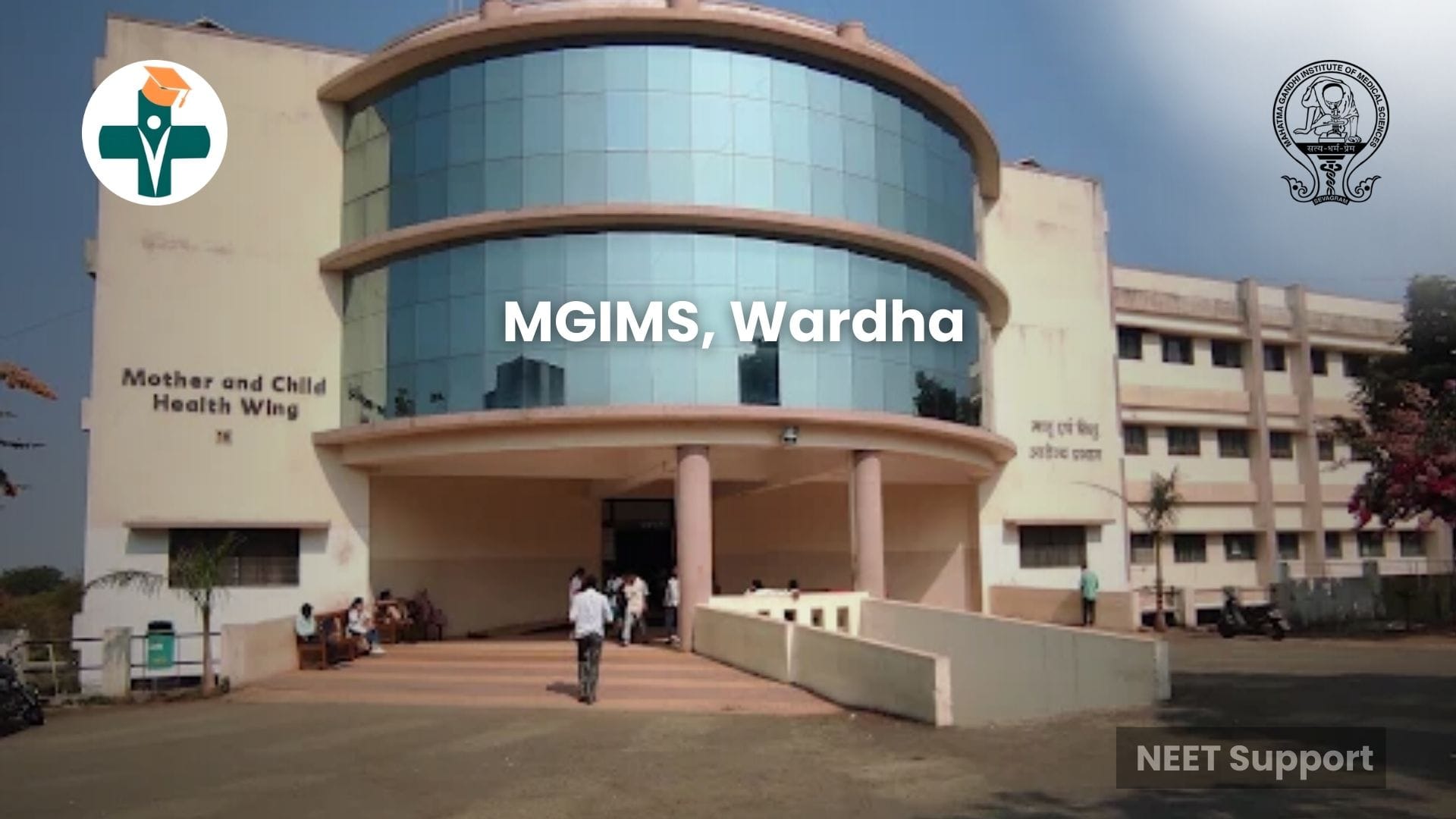
Established in 1969 by Dr. Sushila Nayar, MGIMS is located in the small village of Sevagram close to Wardha in Maharashtra, with the primary goal of providing high-quality healthcare to rural India inspired by Mahatma Gandhi’s principles.
MGIMS is affiliated with MUHS Nashik and is recognized/given an A+ rating by the NMC.
MGIMS is well-known for its special community-oriented medical education (COME) program. Unlike most urban-based colleges where health professionals are primarily trained, MGIMS offers its students opportunities to participate in rural health programs within their first year of study.
There are several areas in which MGIMS excels:
- Community Statics
- Women’s Health
- Eye Care
These areas are critical given MGIMS serves many populations in the surrounding rural community.
Key Highlights
For students and parents looking for a quick snapshot of the institution, here are the vital statistics:
- Year of Establishment: 1969
- Current Dean: Dr. A. K. Shukla
- Founder: Dr. Sushila Nayar
- Campus Area: 450 Acres
- Institute Type: Private (Semi-Government Aided)
- Hospital Attached: Kasturba Hospital
- Core Values: Simple living, Khadi, vegetarianism, and rural service
Courses Offered
MGIMS Wardha offers a comprehensive range of undergraduate and postgraduate programs designed to produce well-rounded medical professionals.
Undergraduate Course
- MBBS (Bachelor of Medicine and Bachelor of Surgery)
Postgraduate Courses
- MD (Doctor of Medicine)
- MS (Master of Surgery) in various clinical and non-clinical specialties.
Doctoral Programs
- PhD in various medical disciplines
Diploma Courses
- Available in specialized nursing and paramedical fields.
Seat Matrix
The seat distribution at MGIMS is unique, focusing on both Maharashtra state students and those from the rest of India.
Fee Structure
The fee structure at MGIMS is relatively affordable compared to other private medical colleges in India due to its government-aided status.
MBBS Fee Structure (Annual Approximation for 2025–26)
Postgraduate (MD/MS) Fee Structure
Infrastructure and Facilities
The MGIMS Campus comprises a tranquil expansive 450-acre area and supports study and development in one calm environment.
- The Central Library is an impressive 16,000 square foot space containing over 50,000 books and journals in addition to an extensive digital collection. The Central Library also contains areas for quiet reading and studying.
- Hostels at MGIMS are located on the premises, providing students with single occupancy rooms that provide a private and quiet place to study.
- Skill Labs at MGIMS utilize advanced technology that creates a clinical environment for practicing clinical skills before performing them with patients in the real world.
- The campus contains five fields for sports and recreation, a gym and areas for playing:
- Cricket
- Basketball
- Badminton
- A vegetarian mess based on Gandhian philosophy provides students with healthy and nutritious meals.
Attached Hospital: Kasturba Hospital
MGIMS is essentially centered around the Kasturba Hospital; it is the heart of MGIMS, and was set up by Mahatma Gandhi in the year 1944. It has grown over the past several decades into one of the leading tertiary care teaching hospitals in India. Both healthcare and the education of MGIMS students are directly supported by the hospital.
- Type of facility: 1,000-bed tertiary care hospital with a breadth of speciality care across the full spectrum of medicine and surgery.
- Patients' Exposure: The hospital averages approximately 1,700 outpatient (out-patient outpatient) visits daily and over 50,000 inpatient admissions annually. This large volume of patients will provide students at MGIMS with numerous opportunities for direct clinical hands-on training during their educational experience at MGIMS.
- Specialties: The hospital is home to multiple advanced specialty units, such as:
- Cath Lab
- NICU (Neonatal Intensive Care Unit)
- PICU (Pediatric Intensive Care Unit)
- Radiation Oncology
- Neurosurgery
In addition, the hospital has around-the-clock well-equipped diagnostic laboratories, imaging equipment, and emergency services.
- Community Health: The hospital has many outreach programs throughout the surrounding tribal and rural communities to provide access to health care for the underserved in these areas. These outreach programs will also allow MGIMS students to gain practical experience with the issues related to rural health and community medicine.
Why Choose MGIMS Wardha?
Choosing MGIMS is not just about getting a degree; it’s about a lifestyle and a philosophy.
Rural Orientation
You will gain experience that most urban medical students never get, preparing you for the real healthcare challenges of India.
Values-Based Education
Students participate in a 15-day Social Service camp in the village, learning about the socio-economic factors affecting health.
Single-Room Hostels
The luxury of having your own space from the first year is a major plus for mental well-being and academic focus.
High Clinical Exposure
The attached hospital sees over a million patients annually, providing immense learning opportunities.
Legacy
Being an alumnus of India's first rural medical college carries significant prestige in the medical community.
Admission Process & Documents Required
Admissions to MGIMS Wardha are strictly based on merit through the NEET entrance examination.
Admission Process
Undergraduate
- Qualify for NEET-UG
- Participate in MCC (All India) or State CET Cell (Maharashtra) counseling.
Postgraduate
- Qualify for NEET-PG
- Participate in the respective counseling rounds.
Documents Required
- NEET Admit Card & Scorecard
- Class 10th & 12th Marksheets and Passing Certificates
- Nationality Certificate / Valid Passport
- Migration & Transfer Certificate
- Medical Fitness Certificate
- Caste / Category Certificate (if applicable)
- Aadhar Card / Photo ID Proof
- Gap Certificate (if applicable)
FAQs
Is MGIMS Wardha a government or private college?
MGIMS will be considered "semi-public" as it is a private medical college that receives both central and state funds (50%) for operations, including a central government and state of Maharashtra 50% education fund. MGIMS is operated by the Kasturba Health Society.
What is the "Social Service Camp" at MGIMS?
The "Social Service Camp" at MGIMS is a required two-week period of time that first-year students will spend living in a rural area with assigned families who are being observed to help the students better understand the culture, difficulties and health care needs of people living in rural India.
Do I have to wear Khadi at MGIMS?
Khadi is required to be worn by students on (the) MGIMS (campus) in accordance with Gandhiji's principles. It encourages simplicity and equality among students.
Do students have a bond with MGIMS?
In general, all students must work in rural areas for at least 1 year after completing their studies. If not, the student is subject to penalties as outlined in (their) bond.
Is the food served in the mess at MGIMS only vegetarian?
Yes, the MGIMS mess follows strict rules of only serving vegetarian food at the MGIMS campus in accordance with the traditions of the ashram.
What is the hospital exposure like for interns?
Interns at Kasturba Hospital get immense exposure. With 1,000 beds and high patient inflow, they handle everything from routine deliveries to complex trauma and infectious diseases.
Is there an entrance exam for Gandhian Thought?
In the past, there was a separate paper, but currently admissions are based on NEET scores. However, students still study Gandhian philosophy as part of their orientation.
Conclusion
MGIMS, the Mahatma Gandhi Institute of Medical Sciences in Wardha has the philosophy of developing a person, rather than simply providing training to return to society as a new physician. The school believes that creativity will provide them with a foundation of knowledge so they can develop innovative solutions to help people through the health system without being restricted by their current capabilities.
The combination of state-of-the-art technological advancements along with traditional values of servery & simplicity is the basis on which graduates from the MGIMS are able to meet the challenges facing the Indian healthcare system.
If you believe your career can be positively impacted by making a difference in the lives of the underprivileged and you want a high-quality education in the process, then MGIMS is the place to begin your medical career!
Reviews
No reviews yet. Be the first to write one!