
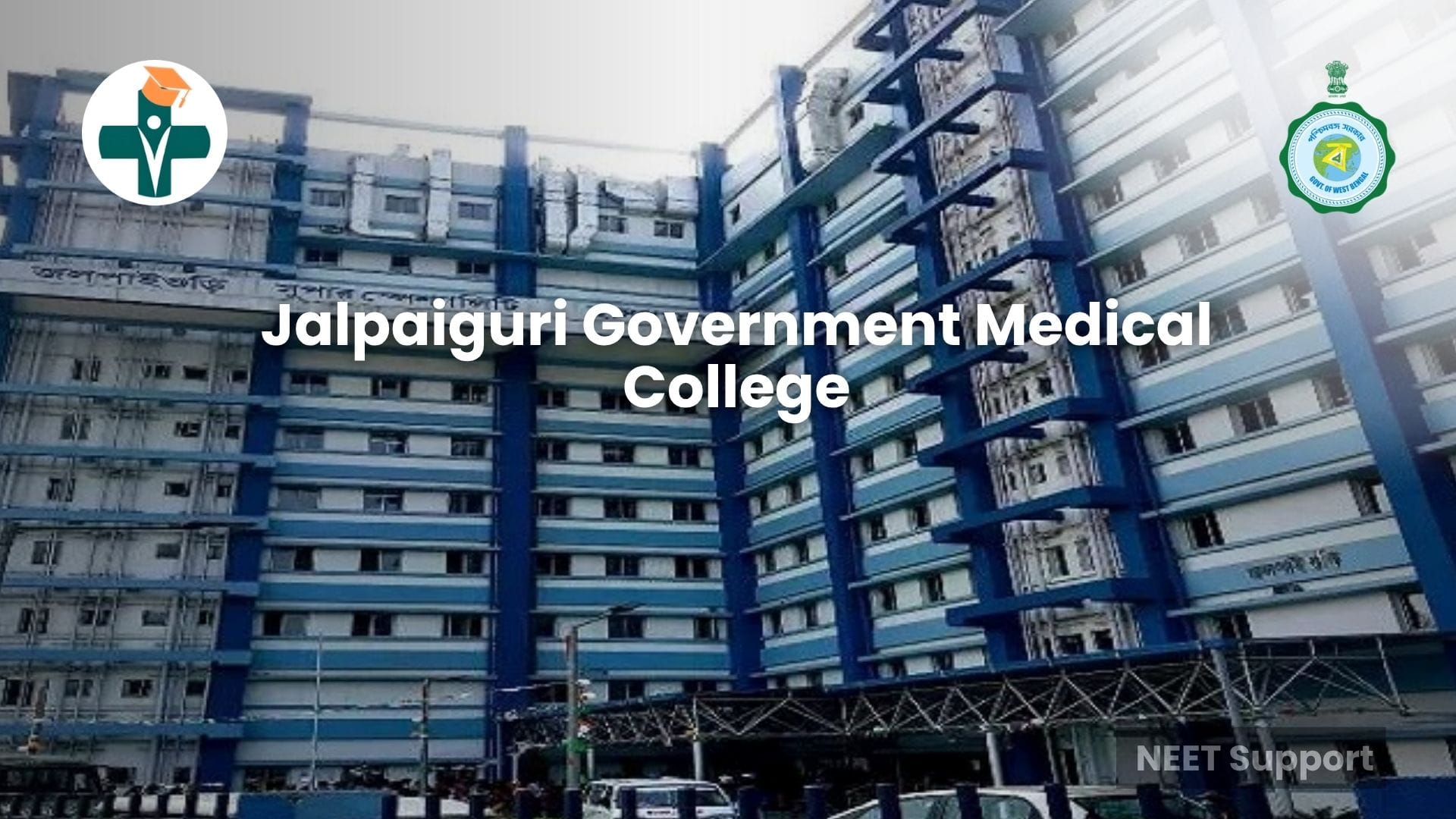
Jalpaiguri Government Medical College and Hospital: Complete Admission, Fees, Cutoff, Courses, Facilities & MBBS Guide 2026
Rashi Goyal
 WhatsApp
 Email
Email Facebook
 Twitter/X
 LinkedIn
Table of Contents
Predict Your Rank Now
Enter your NEET score to get an estimated rank
Find the Best Colleges For You
Based on your NEET rank, Category & more

Get Your Dream Medical College
Secure your seat with expert counselling
Introduction
Jalpaiguri Government Medical College and Hospital (JGMCH) is one of the leading government medical colleges in the state of West Bengal, India. It is a well-known institution that provides quality medical education and healthcare services to the people of North Bengal. Since its establishment, the college has become an important center for training future doctors while also offering affordable medical treatment to thousands of patients every day. The institution is recognized by the National Medical Commission (NMC) and is affiliated with the West Bengal University of Health Sciences (WBUHS). Every year, many students from different parts of India aspire to secure admission to this college because of its low fees, experienced faculty, good clinical exposure, and government hospital facilities.
The college follows the Competency-Based Medical Education (CBME) curriculum prescribed by the National Medical Commission. This curriculum focuses on practical learning, clinical skills, communication abilities, ethics, and patient care. Students are trained to become skilled doctors who can work efficiently in hospitals, clinics, and healthcare organizations.
History of the College
Jalpaiguri Government Medical College and Hospital was established in 2012 by the Government of West Bengal with the objective of improving healthcare services and expanding medical education in North Bengal. Before the establishment of this college, students from this region had limited opportunities to study medicine in nearby government institutions. The government recognized the growing demand for medical professionals and decided to establish a modern medical college in Jalpaiguri.
Since its inception, the college has steadily developed its infrastructure, hospital services, laboratories, classrooms, and hostel facilities. Over the years, it has produced many successful doctors who are serving in government hospitals, private hospitals, research institutions, and public health organizations across India. The attached teaching hospital has also become an important healthcare center for people living in Jalpaiguri and neighboring districts.
College Overview
Jalpaiguri Government Medical College and Hospital is located in Jalpaiguri city in the northern part of West Bengal. The institution is owned and managed by the Government of West Bengal. It offers undergraduate and postgraduate medical education under the guidance of experienced professors and medical specialists.
Some basic information about the college is given below.
| Particular | Details |
|---|---|
| College Name | Jalpaiguri Government Medical College and Hospital |
| Popular Name | JGMCH |
| Established | 2012 |
| College Type | Government |
| State | West Bengal |
| Affiliated University | West Bengal University of Health Sciences |
| Approved By | National Medical Commission |
| MBBS Seats | 100 |
| Admission | Through NEET UG |
Location and Connectivity
The college is situated in Jalpaiguri, one of the major cities of North Bengal. The city is well connected by road and railway networks, making it convenient for students coming from different states. The nearest airport is Bagdogra Airport, which is approximately 50–60 kilometers away from the college. Students can easily reach the campus by bus, taxi, or train from nearby cities such as Siliguri, Cooch Behar, Alipurduar, and Darjeeling.
The peaceful environment of Jalpaiguri provides a suitable atmosphere for higher education. The city has markets, banks, restaurants, bookstores, shopping centers, and other facilities that students may need during their academic life.
Campus Infrastructure
The campus of Jalpaiguri Government Medical College is designed to provide a comfortable learning environment for students. The college has spacious academic buildings equipped with lecture halls, demonstration rooms, laboratories, seminar halls, and museums. The lecture theatres are designed with modern audio-visual teaching aids to improve classroom learning.
The practical laboratories contain the necessary equipment required for medical education. Students perform dissections, experiments, and practical exercises under the supervision of faculty members. The campus also includes administrative offices, examination halls, common rooms, sports facilities, and a cafeteria.
The attached teaching hospital is located within the campus, allowing students to gain practical clinical experience from the early years of their medical education.
Recognition and Affiliation
Recognition and affiliation are important factors while selecting a medical college. Jalpaiguri Government Medical College is recognized by the National Medical Commission, which is the regulatory authority responsible for medical education in India. This recognition ensures that the MBBS degree awarded by the college is valid throughout the country.
The college is affiliated with the West Bengal University of Health Sciences. The university conducts examinations, declares results, prepares academic regulations, and awards degrees to students after successful completion of the course.
Courses Offered
The institution primarily offers the Bachelor of Medicine and Bachelor of Surgery (MBBS) program. In addition to MBBS, postgraduate courses in selected medical specialties have also been introduced over the years according to government approvals and available infrastructure.
The MBBS course remains the most popular program because it is the first step toward becoming a licensed medical doctor in India.
MBBS Course Details
The MBBS program has a total duration of five and a half years. This includes four and a half years of classroom teaching, practical training, laboratory work, and clinical postings followed by one year of compulsory rotating internship.
During the academic years, students study various medical subjects and receive practical training in hospitals. They learn about human anatomy, physiology, diseases, diagnosis, treatment methods, surgery, emergency care, and patient management. The internship year allows students to apply their theoretical knowledge while working under experienced doctors.
MBBS Seat Distribution
Jalpaiguri Government Medical College has 100 MBBS seats.
The seats are distributed according to the Government of India rules.
| Quota | Number of Seats |
|---|---|
| All India Quota | 15 |
| West Bengal State Quota | 85 |
| Total | 100 |
Students from all over India can compete for seats under the All India Quota through the Medical Counselling Committee (MCC). Students belonging to West Bengal can also apply under the State Quota through the state counselling authority.
Eligibility Criteria
Candidates seeking admission to the MBBS course must satisfy the following eligibility conditions.
The applicant should have passed Class 12 or an equivalent examination with Physics, Chemistry, Biology, and English as compulsory subjects.
The candidate must qualify the National Eligibility cum Entrance Test (NEET UG), which is the only entrance examination accepted for MBBS admissions in India.
The applicant must fulfill the minimum age requirement prescribed by the National Medical Commission.
Students belonging to reserved categories receive reservation benefits according to the rules of the Government of India and the Government of West Bengal.
Admission Process
Admission to Jalpaiguri Government Medical College is completely based on merit in the NEET UG examination.
The admission process begins after the declaration of NEET results.
Candidates first register for counselling.
Students applying under the All India Quota participate in counselling conducted by the Medical Counselling Committee.
Students applying under the West Bengal State Quota participate in counselling conducted by the West Bengal state counselling authority.
After registration, candidates fill in their preferred colleges, lock their choices, and wait for seat allotment.
Seats are allotted based on NEET rank, reservation category, availability of seats, and counselling preferences.
After receiving a seat, students must report to the college for document verification and completion of admission formalities.
Once all documents are verified and the required fees are paid, the admission is confirmed.
Fee Structure
One of the biggest advantages of studying at Jalpaiguri Government Medical College is its affordable fee structure. Since it is a government medical college funded by the Government of West Bengal, students pay significantly lower fees compared to private medical colleges. While the exact fee may change slightly every academic year based on government notifications, the overall cost remains very reasonable.
The approximate fee structure is given below.
| Fee Component | Approximate Amount (₹) |
|---|---|
| Admission Fee | 1,000–2,000 |
| Tuition Fee (Per Year) | 9,000–12,000 |
| Examination Fee | 2,000–5,000 |
| Library Fee | 1,000–2,000 |
| Hostel Fee (Per Year) | 1,000–2,000 |
| Miscellaneous Charges | 3,000–5,000 |
The estimated total cost of completing the MBBS course is around ₹45,000–₹70,000, excluding hostel mess charges, books, personal expenses, and stationery. Compared to private medical colleges where the total MBBS fee may exceed ₹50 lakh, Jalpaiguri Government Medical College offers one of the most affordable medical education options in India.
Hostel Facilities
The college provides separate hostels for male and female students. Hostel accommodation helps students from different states stay close to the academic campus and hospital. The hostels are designed to provide a comfortable and safe environment where students can focus on their studies.
Each hostel room is equipped with basic furniture such as beds, study tables, chairs, cupboards, fans, and lighting facilities. Students are expected to maintain cleanliness and follow hostel rules.
The hostel campus provides round-the-clock security. CCTV cameras are installed in important areas, and wardens supervise the hostels to ensure discipline and safety.
The hostel mess serves breakfast, lunch, evening snacks, and dinner every day. The menu generally includes rice, chapati, vegetables, dal, eggs, chicken, fish, and seasonal fruits. Special meals are often arranged during festivals and cultural celebrations.
Other hostel facilities include purified drinking water, Wi-Fi connectivity, laundry areas, common rooms, television rooms, indoor games, and reading rooms.
Library
The Central Library is one of the most important academic resources of the college. It contains a large collection of medical textbooks, reference books, journals, magazines, research publications, and digital learning resources.
Students can access books related to every MBBS subject including Anatomy, Physiology, Biochemistry, Pharmacology, Pathology, Surgery, Medicine, Pediatrics, Orthopedics, Obstetrics and Gynecology, Community Medicine, Microbiology, and many others.
The library also provides internet facilities for online learning. Students use the digital library to access medical journals, research articles, e-books, and international publications. The reading hall remains open for long hours, especially during examination periods.
Laboratories
Practical learning is an essential part of medical education. Jalpaiguri Government Medical College has well-equipped laboratories where students perform experiments and practical exercises under faculty supervision.
The Anatomy Department has a dissection hall where students study the human body through cadaver dissection. This helps them understand the structure of organs, muscles, nerves, blood vessels, and bones.
The Physiology Laboratory allows students to perform experiments related to body functions such as blood pressure measurement, respiratory function, muscle activity, and cardiovascular physiology.
The Biochemistry Laboratory provides training in laboratory techniques related to blood tests, enzyme analysis, metabolism, proteins, carbohydrates, and hormones.
Other departments such as Pathology, Microbiology, Pharmacology, and Forensic Medicine also have dedicated laboratories with modern equipment for practical training.
Academic Departments
The college has several departments that collectively provide complete medical education.
The pre-clinical departments include Anatomy, Physiology, and Biochemistry. These subjects build the basic understanding of the human body.
The para-clinical departments include Pharmacology, Pathology, Microbiology, Community Medicine, and Forensic Medicine. These subjects teach students about diseases, medicines, microorganisms, public health, and legal aspects of medicine.
The clinical departments include General Medicine, General Surgery, Pediatrics, Orthopedics, ENT, Ophthalmology, Dermatology, Psychiatry, Radiology, Anaesthesiology, Obstetrics and Gynecology, Pulmonary Medicine, and Emergency Medicine. Students receive direct patient exposure in these departments.
Teaching Hospital
The attached teaching hospital is one of the major strengths of Jalpaiguri Government Medical College. Thousands of patients visit the hospital every month from Jalpaiguri and nearby districts.
The hospital provides both outpatient (OPD) and inpatient (IPD) services. Students learn by observing experienced doctors, interacting with patients, assisting in clinical procedures, and attending ward rounds.
The hospital has departments for Medicine, Surgery, Pediatrics, Orthopedics, Obstetrics and Gynecology, ENT, Ophthalmology, Dermatology, Psychiatry, Radiology, Emergency Medicine, and several other specialties.
The hospital also includes operation theatres, intensive care units (ICU), blood bank, pathology laboratory, pharmacy, emergency services, and diagnostic centers.
Because of the large patient load, students receive excellent practical exposure, which helps them become confident doctors.
MBBS Curriculum
The MBBS curriculum follows the Competency-Based Medical Education (CBME) system introduced by the National Medical Commission.
During the first professional year, students study Anatomy, Physiology, and Biochemistry.
The second professional year includes Pharmacology, Pathology, Microbiology, and Forensic Medicine.
The third professional part one includes Community Medicine, ENT, and Ophthalmology.
The final professional year focuses on Medicine, Surgery, Pediatrics, Orthopedics, Obstetrics and Gynecology, Dermatology, Psychiatry, Radiology, and other clinical specialties.
In addition to classroom lectures, students attend practical classes, demonstrations, seminars, tutorials, ward postings, and case discussions.
Clinical Training
Clinical training is one of the most valuable aspects of MBBS education.
Students begin hospital postings early in the course and gradually learn how to examine patients, record medical history, diagnose diseases, order investigations, and understand treatment plans.
They also learn communication skills, medical ethics, patient counseling, teamwork, and emergency management.
Senior doctors supervise students during ward rounds and clinical demonstrations, ensuring that they gain confidence in handling real-life medical situations.
Faculty
The college has qualified professors, associate professors, assistant professors, and tutors in every department. Faculty members have years of teaching and clinical experience.
Teachers regularly conduct lectures, practical classes, seminars, bedside clinics, and small-group discussions. Many faculty members also participate in medical research, publish scientific papers, and attend national and international conferences.
Students receive academic guidance, career counseling, and mentorship from experienced teachers throughout the MBBS course.
Student Life
Life at Jalpaiguri Government Medical College is both challenging and enjoyable. The MBBS curriculum requires regular study, practical work, and clinical postings, but students also participate in extracurricular activities.
The college organizes cultural festivals, sports competitions, medical quizzes, debates, seminars, blood donation camps, health awareness programs, and annual celebrations.
Students from different cultural backgrounds study together, creating a friendly and diverse learning environment. Many students also prepare for postgraduate entrance examinations like NEET PG during their MBBS years.
The combination of academics, hostel life, cultural events, and hospital training helps students develop both personally and professionally.
Jalpaiguri Government Medical College and Hospital
Internship
The MBBS course at Jalpaiguri Government Medical College ends with a compulsory rotating internship of one year. This internship is one of the most important phases of medical education because it allows students to apply the knowledge they have gained during the previous four and a half years. During this period, interns work under the supervision of senior doctors and consultants in different departments of the hospital.
The internship includes postings in General Medicine, General Surgery, Pediatrics, Orthopedics, Obstetrics and Gynecology, Community Medicine, Emergency Medicine, ENT, Ophthalmology, Psychiatry, Dermatology, and other departments. Students learn how to examine patients, write prescriptions, perform basic medical procedures, assist in surgeries, manage emergency cases, and communicate effectively with patients and their families.
Interns also become familiar with hospital administration, medical record keeping, infection control practices, and teamwork. Successful completion of the internship is mandatory for obtaining the MBBS degree and registration as a medical practitioner.
Research Opportunities
Medical research plays an important role in improving healthcare. Jalpaiguri Government Medical College encourages students and faculty members to participate in research activities. Interested students can take part in research projects under the guidance of experienced faculty members.
Many undergraduate students apply for the Indian Council of Medical Research (ICMR) Short-Term Studentship (STS) program. This program provides an opportunity to conduct research during the MBBS course. Students also present research papers, posters, and case reports in medical conferences and academic seminars.
Research experience helps students improve their analytical skills, scientific thinking, and understanding of evidence-based medicine. It is also useful for those planning to pursue postgraduate studies or careers in academic medicine.
Postgraduate Courses
Apart from the MBBS program, the college has gradually introduced postgraduate courses in selected specialties. The number of postgraduate seats depends on approvals from the National Medical Commission and the availability of infrastructure and faculty.
Some of the departments where postgraduate courses may be available include General Medicine, General Surgery, Pediatrics, Obstetrics and Gynecology, Anesthesiology, Pathology, Pharmacology, Community Medicine, and other clinical and non-clinical specialties. These courses provide advanced training and prepare doctors for specialist careers.
Examination System
The MBBS examination system follows the regulations of the West Bengal University of Health Sciences and the National Medical Commission.
Students are assessed through internal assessments, practical examinations, viva voce, clinical examinations, and university examinations. Attendance in theory classes, practical sessions, and clinical postings is compulsory. Students must obtain the minimum required marks in both theory and practical examinations to progress to the next professional year.
The university also evaluates students' communication skills, professionalism, ethics, and clinical competence under the Competency-Based Medical Education system.
Placement and Career Opportunities
Unlike engineering colleges, medical colleges do not usually have placement drives through companies. After completing the MBBS degree and internship, graduates have several career options.
Many graduates join government hospitals as Medical Officers through state or central government recruitment. Others work in private hospitals, nursing homes, clinics, or charitable healthcare organizations. Some doctors establish their own clinics after gaining experience.
Many students prepare for the National Eligibility-cum-Entrance Test for Postgraduate (NEET PG) to pursue MD or MS in their preferred specialties. Some graduates also appear for examinations such as INI-CET for admission to premier medical institutes.
Doctors can also work in public health departments, research organizations, medical colleges, the Armed Forces Medical Services, railway hospitals, or corporate healthcare institutions. Those interested in international careers may prepare for licensing examinations such as the USMLE or PLAB.
NEET UG Cutoff
Admission to Jalpaiguri Government Medical College is highly competitive because of its affordable fees and good reputation. The closing rank changes every year depending on the number of applicants, difficulty level of the examination, availability of seats, and counselling rounds.
The approximate closing ranks under the All India Quota are shown below.
| Category | Approximate Closing Rank |
|---|---|
| General | 14,000–18,000 |
| OBC | 16,000–20,000 |
| EWS | 16,000–20,000 |
| SC | 90,000–1,10,000 |
| ST | 1,20,000–1,60,000 |
The approximate closing ranks under the West Bengal State Quota are given below.
| Category | Approximate Closing Rank |
|---|---|
| UR | 18,000–24,000 |
| OBC-A | 22,000–30,000 |
| OBC-B | 24,000–32,000 |
| EWS | 22,000–30,000 |
| SC | 1,10,000–1,60,000 |
| ST | 2,20,000–3,20,000 |
These figures are only approximate and should be used as a reference. Actual cutoffs vary every year.
Expected Safe NEET Score
Students often ask what score is considered safe for admission. Although the required marks change every year, the following scores are generally considered competitive.
| Category | Expected Safe Score |
|---|---|
| General | 645–665 |
| OBC | 640–660 |
| EWS | 640–660 |
| SC | 560–590 |
| ST | 500–540 |
A higher NEET score always improves the chances of getting admission in the first round of counselling.
Advantages of Studying at Jalpaiguri Government Medical College
One of the biggest advantages of the college is its affordable fee structure, making medical education accessible to students from different economic backgrounds.
The attached government hospital receives a large number of patients every day. This provides excellent clinical exposure and practical learning opportunities.
The college has experienced faculty members who guide students in academics, clinical practice, and research.
The institution follows the latest Competency-Based Medical Education curriculum prescribed by the National Medical Commission.
The library, laboratories, classrooms, and hospital facilities provide a strong academic environment for medical education.
Students also benefit from hostel facilities, extracurricular activities, seminars, workshops, and research opportunities.
Graduates from the college have good opportunities for postgraduate education, government jobs, and private practice.
Limitations
Like many government medical colleges, hostel accommodation may be limited depending on the number of students.
The hospital remains busy throughout the year because of the high patient load, resulting in a demanding academic schedule.
Some parts of the infrastructure may not be as modern as those found in newly established private medical colleges, although the quality of medical education remains strong.
Medical education itself is highly demanding, requiring dedication, discipline, and continuous study throughout the course.
Why Students Choose This College?
Students prefer Jalpaiguri Government Medical College because it combines quality education with affordable fees. The college offers strong clinical exposure through its government teaching hospital, experienced faculty, good academic standards, and recognition by the National Medical Commission.
The peaceful environment of Jalpaiguri, combined with modern teaching methods and a supportive academic atmosphere, makes it a suitable place for pursuing MBBS. Students also appreciate the opportunity to interact with patients from diverse backgrounds, helping them develop practical medical skills and confidence.
Frequently Asked Questions (FAQs)
Q1. Where is Jalpaiguri Government Medical College and Hospital located?
Jalpaiguri Government Medical College and Hospital is located in Jalpaiguri city, West Bengal, India. It serves as one of the major government medical institutions in North Bengal.
Q2. When was Jalpaiguri Government Medical College established?
The college was established in 2012 by the Government of West Bengal to improve medical education and healthcare services in the northern part of the state.
Q3. Is Jalpaiguri Government Medical College a government or private college?
It is a government medical college managed by the Government of West Bengal.
Q4. Is the college recognized by the National Medical Commission (NMC)?
Yes, the college is recognized by the National Medical Commission (NMC), and the MBBS degree awarded by the college is valid across India.
Conclusion
Jalpaiguri Government Medical College and Hospital is one of the most respected government medical institutions in North Bengal. Since its establishment in 2012, it has played an important role in medical education and healthcare services. The college provides a well-structured MBBS program, affordable fee structure, experienced faculty, modern laboratories, an extensive library, separate hostel facilities, and an attached teaching hospital that offers excellent clinical exposure.
Admission to the college is based solely on performance in the NEET UG examination, making it a highly competitive institution. Students who secure admission receive quality medical education at a very low cost compared to private medical colleges. The practical training provided during hospital postings and the compulsory internship prepares graduates to become competent and compassionate doctors.
For students who dream of becoming successful medical professionals without spending huge amounts on tuition fees, Jalpaiguri Government Medical College and Hospital remains an excellent choice. It offers the right balance of academic excellence, practical learning, patient exposure, research opportunities, and career growth. Graduates from this institution are well prepared for postgraduate studies, government medical services, private practice, research, and various other healthcare careers, making the college a valuable destination for aspiring doctors in India.
Reviews
No reviews yet. Be the first to write one!