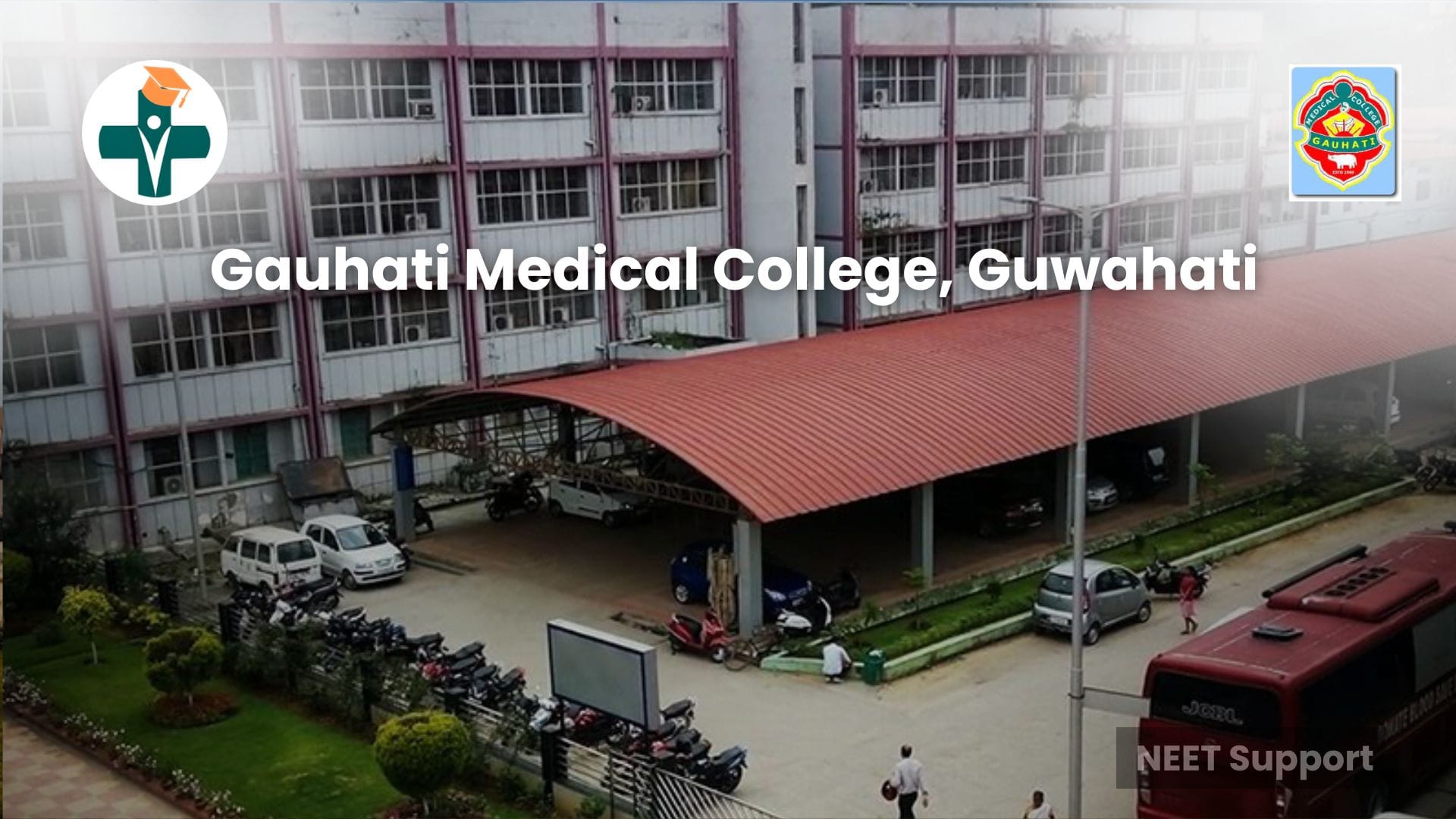
Gauhati Medical College, Guwahati: A Premier Institution Shaping Healthcare in Northeast India
Rashi Goyal
 WhatsApp
 Email
Email Facebook
 Twitter/X
 LinkedIn
Table of Contents
Predict Your Rank Now
Enter your NEET score to get an estimated rank
Find the Best Colleges For You
Based on your NEET rank, Category & more

Get Your Dream Medical College
Secure your seat with expert counselling
Introduction
Gauhati Medical College and Hospital (GMCH), located in Guwahati, Assam, is one of the oldest and most prestigious government medical institutions in Northeast India. Since its establishment in 1960, the college has played a transformative role in medical education, healthcare services, and clinical research. Over the decades, it has become a symbol of excellence, producing thousands of doctors, specialists, nurses, and healthcare professionals who have contributed significantly to India's healthcare system. The institution serves not only the people of Assam but also patients from neighboring states such as Arunachal Pradesh, Meghalaya, Nagaland, Manipur, Mizoram, Tripura, and even neighboring countries in some cases. With its commitment to quality education, affordable healthcare, and continuous modernization, Gauhati Medical College has earned a distinguished reputation among India's leading medical colleges.
Medical education in Northeast India has witnessed tremendous growth over the past several decades, and Gauhati Medical College has been one of the primary driving forces behind this development. The institution combines strong academic programs with practical clinical training, ensuring that students receive a comprehensive medical education. At the same time, the attached teaching hospital provides advanced healthcare services to thousands of patients every day, making it one of the busiest government hospitals in the region.
The History of Gauhati Medical College
The history of Gauhati Medical College reflects Assam's commitment to improving healthcare infrastructure and medical education. Before the establishment of the institution, Assam Medical College in Dibrugarh was the state's only medical college. As the population continued to grow and healthcare needs expanded, the Government of Assam recognized the necessity of establishing another medical institution that could serve the central and western regions of the state.
Construction of Gauhati Medical College began in 1959, and the institution officially started functioning on 20 September 1960. Initially, the college operated from temporary facilities at Jalukbari in Guwahati while the permanent campus was under development. Over the following years, academic departments, hospital facilities, laboratories, and administrative buildings were gradually shifted to the permanent campus located at Narakasur Hilltop in Bhangagarh.
The institution continued expanding throughout the following decades. New academic departments, specialized hospitals, research facilities, and modern diagnostic centers were added to accommodate the increasing demand for healthcare and medical education. Today, Gauhati Medical College stands as one of the largest tertiary healthcare institutions in Northeast India and continues to evolve with advancements in medical science and technology.
Gauhati Medical College MBBS Cutoff (Expected 2025)
Admission to the MBBS program at Gauhati Medical College is based on the NEET UG examination followed by counselling conducted under the All India Quota (AIQ) and Assam State Quota. The cutoff varies every year depending on factors such as the number of applicants, seat availability, reservation categories, and the difficulty level of the NEET examination. Gauhati Medical College has increased its MBBS intake to 250 seats for the 2025–26 academic session.
| Category | All India Quota Closing Rank (Expected) | Assam State Quota Closing Rank (Expected) |
|---|---|---|
| General (UR) | 4,500 – 7,000 | 7,000 – 10,000 |
| EWS | 6,000 – 8,500 | 8,000 – 12,000 |
| OBC | 5,000 – 8,000 | 8,000 – 12,500 |
| SC | 35,000 – 55,000 | 45,000 – 70,000 |
| ST | 55,000 – 90,000 | 70,000 – 1,20,000 |
Note: The above figures are indicative ranges based on recent counselling trends and may vary each year depending on NEET performance and counselling rounds.
Gauhati Medical College MBBS Fee Structure
As a government medical college under the Government of Assam, Gauhati Medical College offers one of the most affordable MBBS programs in India. Students are required to pay tuition fees along with admission, examination, hostel, library, and other institutional charges as prescribed by the college. The latest fee details are available on the official fee structure page.
| Fee Component | Approximate Amount |
|---|---|
| Admission Fee | ₹1,000 – ₹2,000 |
| Tuition Fee (Per Year) | ₹6,000 – ₹8,000 |
| Examination Fee | ₹1,000 – ₹2,000 |
| Library Fee | ₹500 – ₹1,000 |
| Laboratory Fee | ₹500 – ₹1,000 |
| Student Union & Miscellaneous Charges | ₹1,000 – ₹2,000 |
| Hostel Fee (if applicable) | ₹5,000 – ₹10,000 per year |
| Total Annual Fee | Approximately ₹12,000 – ₹20,000 |
The overall cost of completing the MBBS course at Gauhati Medical College remains significantly lower than that of private medical colleges, making it a preferred choice for NEET aspirants seeking quality medical education at an affordable cost. Students should also budget for hostel accommodation, mess charges, books, uniforms, and personal expenses, which vary depending on individual preferences.
Vision and Mission
Gauhati Medical College is guided by a vision of providing excellent medical education, delivering affordable and accessible healthcare, and promoting innovative medical research. The institution strives to produce competent healthcare professionals who possess both clinical expertise and ethical values.
Its mission includes providing patient-centered care, promoting evidence-based medicine, encouraging scientific research, and ensuring continuous academic improvement. The college also focuses on serving underserved communities by training doctors who understand the unique healthcare challenges faced by the people of Northeast India.
Apart from teaching and patient care, the institution actively participates in national healthcare programs, disease prevention initiatives, vaccination campaigns, maternal and child health services, and public health awareness activities. These efforts strengthen its role as both an educational institution and a public healthcare leader.
Campus and Infrastructure
The campus of Gauhati Medical College is spread across a vast area in Bhangagarh, Guwahati. Over the years, the institution has developed a modern educational environment equipped with advanced facilities that support learning, research, and patient care.
The academic buildings house spacious lecture theatres equipped with audiovisual teaching aids, seminar halls, departmental libraries, laboratories, museums, demonstration rooms, and faculty offices. Students have access to modern educational resources that combine traditional classroom teaching with digital learning methods.
The central library serves as one of the most valuable academic resources on campus. It contains thousands of medical textbooks, journals, research publications, dissertations, and digital databases covering various branches of medicine and allied health sciences. Students and faculty members utilize these resources extensively for academic study and research activities.
The campus also includes separate hostels for undergraduate students, postgraduate residents, nursing students, and interns. Comfortable accommodation allows students from different parts of India to pursue their education in a supportive learning environment. Faculty residences and staff quarters further contribute to the development of a self-contained academic community.
Modern laboratories equipped with sophisticated instruments enable students to gain practical experience in anatomy, physiology, biochemistry, pathology, microbiology, pharmacology, forensic medicine, and various clinical disciplines. Simulation-based learning and skill development laboratories help students improve their clinical competencies before treating actual patients.
Academic Excellence
One of the defining characteristics of Gauhati Medical College is its strong academic foundation. The institution offers undergraduate, postgraduate, super-specialty, nursing, and allied health science programs designed to prepare healthcare professionals for modern medical practice.
The Bachelor of Medicine and Bachelor of Surgery (MBBS) program remains the flagship course of the institution. Every year, hundreds of aspiring medical students compete for admission through the National Eligibility cum Entrance Test (NEET). The rigorous curriculum combines theoretical knowledge with practical clinical exposure, ensuring that graduates are well prepared for medical practice.
Postgraduate education at Gauhati Medical College includes Doctor of Medicine (MD) and Master of Surgery (MS) programs across multiple specialties such as General Medicine, Pediatrics, Obstetrics and Gynecology, General Surgery, Orthopedics, Radiology, Psychiatry, Dermatology, Anesthesiology, Pathology, Microbiology, Physiology, Biochemistry, and several others.
The institution has also expanded its super-specialty education by offering Doctorate of Medicine (DM) and Master of Chirurgiae (MCh) programs in advanced disciplines. These programs help address the growing need for highly specialized medical professionals capable of managing complex diseases and performing advanced surgical procedures.
Nursing education is another important component of the institution. The nursing college offers undergraduate and postgraduate programs that prepare nurses to deliver compassionate and evidence-based patient care. Allied health science programs further contribute to the development of skilled laboratory technicians, radiographers, physiotherapists, and other healthcare professionals.
Faculty and Teaching Methodology
The quality of any medical institution depends significantly on the expertise of its faculty, and Gauhati Medical College has consistently maintained a strong team of experienced professors, associate professors, assistant professors, clinicians, and researchers. Many faculty members have decades of teaching experience and have contributed extensively to medical research, healthcare policy, and clinical practice.
Teaching at the institution follows an integrated approach that combines classroom lectures, practical demonstrations, laboratory sessions, clinical postings, bedside teaching, seminars, journal clubs, case discussions, workshops, and continuing medical education programs.
Students receive early clinical exposure through hospital postings, allowing them to understand patient care from the beginning of their medical education. Regular interaction with patients helps students develop communication skills, diagnostic abilities, ethical decision-making, and professional confidence.
Modern teaching methodologies such as simulation-based training, digital presentations, online learning resources, virtual classrooms, and evidence-based medicine have further strengthened the educational experience offered by the institution.
Hospital Services
The attached Gauhati Medical College Hospital serves as one of the largest government hospitals in Northeast India. It functions as a tertiary referral center where patients receive specialized treatment for a wide range of medical and surgical conditions.
Thousands of patients visit the outpatient departments every day, while emergency services operate around the clock to manage trauma cases, medical emergencies, obstetric emergencies, and critical illnesses. The hospital's large inpatient facilities accommodate patients requiring specialized treatment across numerous departments.
Clinical departments include General Medicine, General Surgery, Pediatrics, Obstetrics and Gynecology, Orthopedics, Ophthalmology, ENT, Psychiatry, Dermatology, Cardiology, Neurology, Nephrology, Urology, Gastroenterology, Pulmonary Medicine, Endocrinology, Oncology, Plastic Surgery, Neurosurgery, Cardiothoracic Surgery, and several others.
Modern diagnostic facilities such as MRI, CT scan, digital radiography, ultrasonography, echocardiography, endoscopy, catheterization laboratories, pathology laboratories, microbiology laboratories, molecular diagnostic units, and blood banks support accurate diagnosis and effective treatment.
The hospital also operates intensive care units, neonatal intensive care units, pediatric intensive care units, surgical intensive care units, trauma centers, dialysis units, cancer treatment facilities, and advanced operation theatres equipped with modern surgical technology.
Research and Medical Innovation
Research has become an essential pillar of Gauhati Medical College's mission to improve healthcare outcomes and medical education. While patient care and teaching remain its primary responsibilities, the institution has steadily strengthened its research capabilities over the years. Faculty members, postgraduate students, and research scholars actively participate in studies that address both regional and national health challenges.
The college encourages research across a wide range of disciplines, including infectious diseases, non-communicable diseases, maternal and child health, public health, tropical medicine, microbiology, pharmacology, pathology, and clinical medicine. Since Northeast India presents unique healthcare challenges due to its geography, climate, and demographic diversity, many research projects focus on diseases and health conditions that are particularly relevant to the region.
The Medical Research Unit provides infrastructure and guidance for conducting scientific investigations. Researchers have access to laboratories, advanced diagnostic equipment, and collaborations with other institutions to support evidence-based medical studies. Many research findings from the institution have contributed to better disease management strategies and improved patient care practices.
Students are also encouraged to participate in research activities from an early stage of their medical education. Undergraduate research projects, scientific paper presentations, and participation in national conferences help students develop analytical thinking and an understanding of scientific methodology. These opportunities prepare future doctors to practice evidence-based medicine throughout their careers.
Specialized Healthcare Centers
One of the major strengths of Gauhati Medical College is its network of specialized healthcare centers that provide advanced treatment to patients from across Northeast India. These facilities have significantly reduced the need for patients to travel to metropolitan cities for complex medical procedures.
The Super Specialty Hospital within the campus offers advanced care in multiple disciplines. Highly trained specialists, modern medical equipment, and multidisciplinary treatment approaches ensure that patients receive comprehensive healthcare under one roof.
The State Cancer Institute has emerged as a major center for cancer diagnosis and treatment in Assam. Equipped with advanced radiation therapy machines, chemotherapy units, surgical oncology services, and supportive care facilities, the institute serves thousands of cancer patients every year. Early detection programs and awareness campaigns further contribute to cancer prevention and timely treatment.
The Cardiology Department provides specialized services including cardiac imaging, interventional cardiology, pacemaker implantation, and management of complex heart diseases. Similarly, the Cardiothoracic Surgery Department performs life-saving cardiac and thoracic surgical procedures using modern surgical techniques.
Neurology and Neurosurgery departments offer diagnosis and treatment for stroke, epilepsy, brain tumors, spinal disorders, and various neurological diseases. Advanced imaging facilities and experienced specialists enable effective management of complex neurological conditions.
Nephrology services include dialysis, management of chronic kidney disease, and specialized renal care. Patients suffering from kidney failure receive regular dialysis treatment within the institution, significantly improving their quality of life.
Departments such as Gastroenterology, Endocrinology, Pulmonary Medicine, Plastic Surgery, Urology, Pediatric Surgery, and Critical Care Medicine continue to expand their services, reflecting the institution's commitment to providing comprehensive healthcare.
Clinical Training and Hands-On Experience
One of the greatest advantages of studying at Gauhati Medical College is the extensive clinical exposure available to students. Since the attached hospital receives thousands of patients daily, medical students gain valuable experience by observing and participating in the diagnosis and treatment of diverse medical conditions.
Clinical postings begin early during the MBBS course, allowing students to interact with patients under the supervision of experienced faculty members. They learn history taking, physical examination, diagnostic reasoning, communication skills, and patient counseling in real-world healthcare settings.
During internship, students rotate through various departments, including medicine, surgery, pediatrics, obstetrics and gynecology, orthopedics, emergency medicine, community medicine, and other specialties. This rotational training ensures that graduates develop practical competencies required for independent medical practice.
Postgraduate students receive even more intensive clinical training. They manage complex cases, perform specialized procedures, participate in surgeries, and contribute to academic discussions while working closely with senior consultants. This rigorous training prepares them for careers as specialists and consultants.
Regular case presentations, morbidity and mortality meetings, grand rounds, clinical audits, and interdisciplinary discussions further strengthen clinical education and encourage continuous professional development.
Community Healthcare Initiatives
Beyond the hospital campus, Gauhati Medical College actively participates in improving community health across Assam. The institution recognizes that healthcare extends beyond hospital walls and requires engagement with rural and underserved populations.
The Department of Community Medicine conducts regular health camps, vaccination drives, maternal health programs, school health initiatives, and disease screening camps in nearby villages and urban communities. These programs provide essential healthcare services to people who may otherwise have limited access to medical facilities.
Medical students participate in rural postings where they gain firsthand understanding of public health challenges such as malnutrition, sanitation, infectious diseases, maternal mortality, and healthcare accessibility. These experiences help students appreciate the social determinants of health and develop empathy toward diverse patient populations.
The institution also supports national health programs focusing on tuberculosis control, HIV/AIDS prevention, malaria elimination, immunization, family planning, diabetes management, hypertension screening, and non-communicable disease prevention.
During public health emergencies and natural disasters, faculty members, doctors, nurses, and students have consistently contributed to relief efforts by providing emergency medical care, health education, and disease surveillance.
Student Life at Gauhati Medical College
Life at Gauhati Medical College extends beyond classrooms and hospital wards. The institution provides students with numerous opportunities for personal growth, leadership development, cultural participation, and extracurricular engagement.
Students come from various states across India, creating a diverse academic community where different cultures, languages, and traditions coexist. This multicultural environment enriches the educational experience and promotes mutual understanding among future healthcare professionals.
The campus hosts annual cultural festivals, sports competitions, literary events, debates, music performances, drama productions, and inter-college competitions. These activities help students maintain a healthy balance between academic responsibilities and recreational pursuits.
Sports facilities encourage participation in cricket, football, badminton, volleyball, basketball, athletics, table tennis, and indoor games. Regular sporting events promote physical fitness, teamwork, and stress management.
Student organizations and academic societies organize seminars, workshops, blood donation camps, awareness campaigns, quiz competitions, and scientific conferences throughout the academic year. These activities enhance leadership skills, communication abilities, and professional networking opportunities.
Hostel life fosters lifelong friendships among students who often spend years studying together. Living on campus allows students to engage in collaborative learning, peer discussions, and group study sessions that strengthen academic performance.
Technological Advancements
Healthcare technology continues to evolve rapidly, and Gauhati Medical College has embraced modernization to improve patient care and medical education. Digital transformation has become an important component of institutional development.
Electronic diagnostic equipment, digital imaging systems, automated laboratory analyzers, advanced operation theatres, and modern intensive care units contribute to accurate diagnosis and efficient treatment.
Medical education has also benefited from technological integration. Digital classrooms, online learning platforms, virtual seminars, electronic journals, and simulation laboratories allow students to access updated educational resources and develop clinical skills using modern teaching methods.
Telemedicine services have expanded healthcare accessibility by enabling specialists to provide consultations to patients located in remote areas of Assam and neighboring states. This approach reduces travel burdens while ensuring timely specialist advice.
Hospital information systems improve patient registration, medical record management, laboratory reporting, pharmacy services, and administrative efficiency. These technological advancements contribute to better coordination among healthcare professionals and improved patient experiences.
Challenges and Opportunities
Like many large government medical institutions, Gauhati Medical College faces several challenges associated with increasing patient numbers, infrastructure expansion, faculty recruitment, and technological upgrades. As one of the busiest hospitals in Northeast India, the institution often manages patient volumes that exceed its intended capacity.
Despite these challenges, the college continues to expand its facilities and strengthen healthcare services. New academic departments, additional hospital buildings, modern diagnostic centers, and specialized treatment units are being developed to meet growing healthcare demands.
Government support, increased investment in healthcare infrastructure, faculty development programs, and collaborations with national institutions provide opportunities for further growth. Continued modernization will enable the institution to deliver even higher standards of education, research, and patient care in the coming years.
The emphasis on digital health, precision medicine, artificial intelligence, advanced diagnostics, and interdisciplinary collaboration offers exciting possibilities for the institution's future development. As healthcare evolves, Gauhati Medical College is well positioned to adapt and continue serving as a regional leader in medical education and healthcare delivery.
Achievements and Recognition
Over more than six decades, Gauhati Medical College has achieved numerous milestones in medical education, patient care, and research. The institution has earned recognition as one of the leading government medical colleges in Northeast India due to its consistent commitment to academic excellence and healthcare delivery.
The college has successfully trained thousands of undergraduate and postgraduate medical professionals who now serve in government hospitals, private healthcare institutions, medical colleges, research organizations, and international healthcare systems. Many alumni have gone on to become renowned physicians, surgeons, academicians, healthcare administrators, and public health experts.
The institution has continuously expanded its academic offerings by introducing postgraduate and super-specialty programs that meet the growing demand for highly skilled medical professionals. These additions have strengthened the region's healthcare system by making advanced medical education more accessible within Northeast India.
Its attached teaching hospital has also become one of the largest referral centers in the region, managing complex medical and surgical cases that require multidisciplinary expertise. The availability of specialized departments has reduced the need for patients to travel to distant metropolitan hospitals for advanced treatment.
Faculty members regularly publish research papers in national and international medical journals, participate in scientific conferences, and contribute to medical education reforms. Their dedication to teaching and research has helped maintain the institution's academic standards while fostering innovation in clinical practice.
Future Vision
As healthcare continues to evolve rapidly, Gauhati Medical College remains committed to continuous improvement and innovation. The institution aims to further enhance its educational standards, research capabilities, and patient care services through strategic planning and infrastructure development.
Future priorities include expanding super-specialty departments, strengthening research laboratories, increasing student intake while maintaining educational quality, and introducing emerging fields of medical science into the curriculum. Investments in advanced diagnostic technologies, robotic-assisted surgery, digital healthcare systems, and simulation-based medical education are expected to further improve healthcare delivery.
The college also seeks to strengthen national and international collaborations with universities, research organizations, and healthcare institutions. Such partnerships will facilitate knowledge exchange, joint research projects, faculty development, and student training opportunities.
Environmental sustainability is becoming an important aspect of institutional planning as well. Initiatives aimed at energy conservation, biomedical waste management, water conservation, and green campus development reflect the institution's commitment to responsible healthcare practices.
By embracing innovation while preserving its tradition of excellence, Gauhati Medical College is well positioned to remain a leading center for medical education and healthcare in Northeast India for decades to come.
Why Students Choose Gauhati Medical College?
Every year, thousands of aspiring medical students compete for admission to Gauhati Medical College because of its strong academic reputation, experienced faculty, and extensive clinical exposure.
Students benefit from learning in one of the busiest teaching hospitals in the region, where they encounter a wide variety of medical conditions that enrich their clinical experience. The institution's balanced approach to classroom teaching, laboratory training, bedside learning, and research prepares graduates for successful medical careers.
Affordable education, government-supported infrastructure, diverse patient exposure, postgraduate opportunities, experienced mentors, and an active academic environment make the college an attractive destination for medical aspirants across India.
The multicultural student community further enhances the educational experience by encouraging collaboration, cultural exchange, and lifelong professional relationships among future healthcare professionals.
Impact on Northeast India's Healthcare
The influence of Gauhati Medical College extends far beyond its campus. As one of the oldest medical institutions in the region, it has played a pivotal role in strengthening healthcare infrastructure throughout Northeast India.
The institution supplies trained doctors, nurses, specialists, and allied healthcare professionals who serve in urban hospitals, rural health centers, medical colleges, military hospitals, and public health organizations. These professionals contribute significantly to improving healthcare accessibility across geographically challenging regions.
Its research activities address healthcare issues unique to Northeast India, including infectious diseases, maternal health, nutrition, environmental health, and emerging public health concerns. By generating locally relevant scientific evidence, the institution helps shape healthcare policies and clinical practices that directly benefit regional populations.
Through its commitment to education, research, patient care, and community outreach, Gauhati Medical College continues to serve as a cornerstone of healthcare development in the northeastern states.
Frequently Asked Questions (FAQs)
1. Where is Gauhati Medical College located?
Gauhati Medical College and Hospital is located at Bhangagarh, Guwahati, in the state of Assam, India.
2. When was Gauhati Medical College established?
The institution was established on 20 September 1960 and is one of the oldest government medical colleges in Northeast India.
3. What courses are offered at Gauhati Medical College?
The college offers MBBS, MD, MS, DM, MCh, nursing programs, and various allied health science courses.
4. Is Gauhati Medical College a government institution?
Yes. Gauhati Medical College is a government medical college under the Government of Assam.
5. Why is Gauhati Medical College considered important?
The institution is recognized for its quality medical education, extensive clinical training, advanced healthcare services, research contributions, and its significant role in improving healthcare across Northeast India.
Conclusion
Gauhati Medical College and Hospital stands as a remarkable example of excellence in medical education, patient care, and scientific research. Since its establishment in 1960, the institution has transformed countless lives by educating skilled healthcare professionals, delivering advanced medical services, and contributing to public health across Northeast India.
Its comprehensive academic programs, experienced faculty, state-of-the-art healthcare facilities, and strong commitment to community service have earned it a respected place among India's leading government medical colleges. The institution's ability to combine academic excellence with compassionate patient care has made it an invaluable resource for millions of people.
For aspiring medical students, dedicated researchers, experienced clinicians, and patients seeking quality treatment, Gauhati Medical College represents a legacy of trust, knowledge, and service. Its enduring contribution to healthcare and medical education ensures that it will continue to play a vital role in shaping the future of medicine in Assam and the entire Northeast region of India.
Reviews
No reviews yet. Be the first to write one!