Bashkir State Medical University (BSMU), Russia: The Ultimate Guide to Becoming a Global Doctor
Nishat
 WhatsApp
 Email
Email Facebook
 Twitter/X
 LinkedIn
Table of Contents
Predict Your Rank Now
Enter your NEET score to get an estimated rank
Find the Best Colleges For You
Based on your NEET rank, Category & more

Get Your Dream Medical College
Secure your seat with expert counselling
Overview
Choosing the right medical university is one of the most critical decisions a future doctor will ever make. Over the past few decades, studying MBBS abroad has evolved from an alternative option into a mainstream pathway for thousands of medical aspirants globally. Among the top destinations, the Russian Federation stands tall, and at the very forefront of Russian medical education sits Bashkir State Medical University (BSMU).
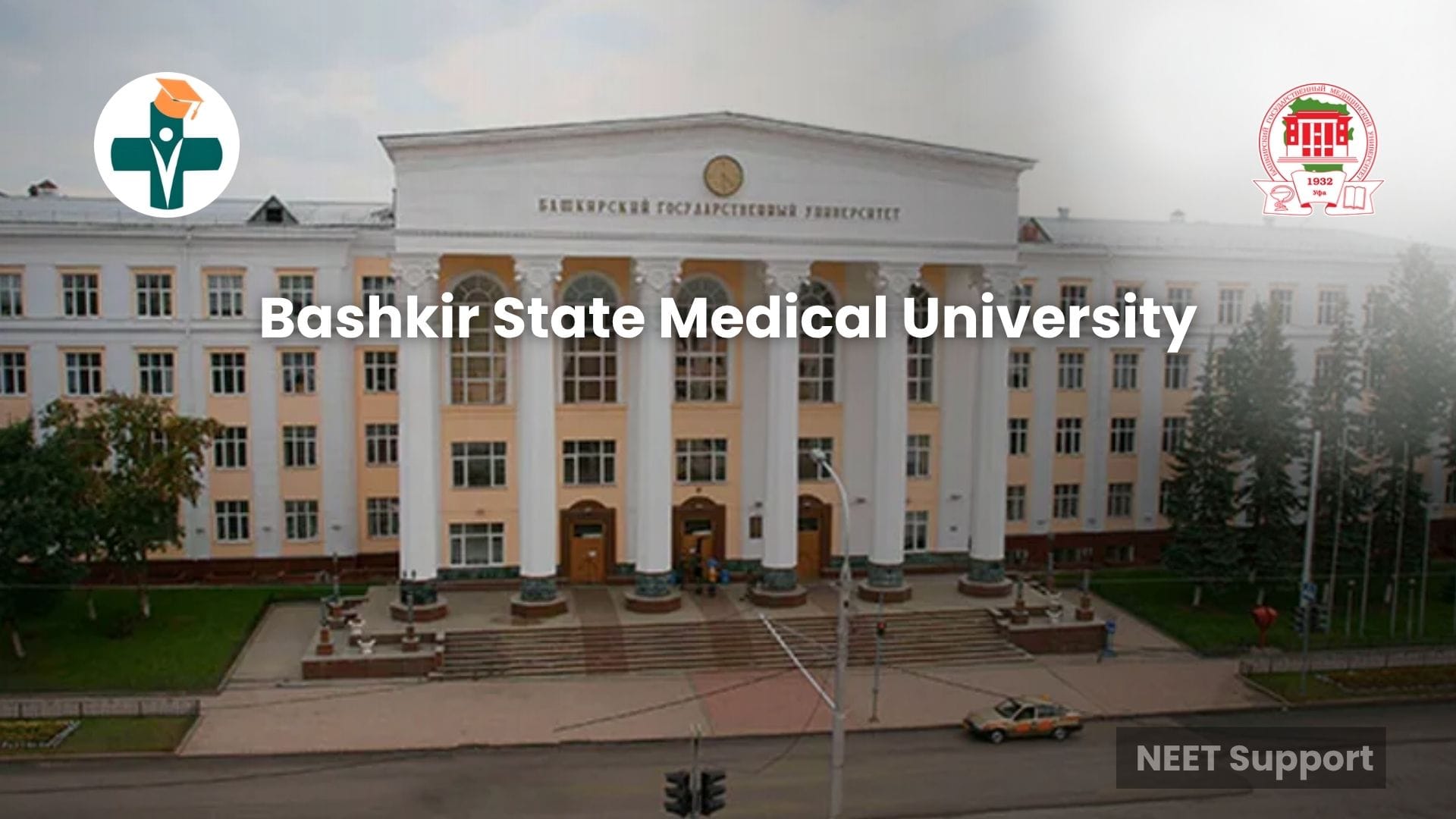
Located in the historic and vibrant city of Ufa, BSMU is not just an educational institution; it is a sprawling medical ecosystem with a legacy spanning nearly a century. Established in 1932, it has transformed into a global hub for medical training, currently hosting thousands of international students from over 50 countries, with a remarkably strong and thriving community of Indian students.
Whether you are an aspirant trying to decode the complexities of the National Medical Commission (NMC) guidelines, wondering about the reality of living in Russia, or analyzing the return on investment of a global medical degree, this comprehensive, long-form guide will dissect every single facet of Bashkir State Medical University.
Quick Institutional Highlights
Before diving deep into the history, academics, and daily student life, let us look at the foundational parameters of Bashkir State Medical University to understand its baseline standing.
| Parameter | Key Details |
|---|---|
| Year of Establishment | 1932 (Over 90 Years of Academic Legacy) |
| Location | Ufa, Capital of the Republic of Bashkortostan, Russia |
| Institution Type | Public / Government Research University |
| Primary Degree Offered | General Medicine (Equivalent to MBBS in India) |
| Course Duration | 6 Years (5 Years Academic + 1 Year Clinical Internship) |
| Medium of Instruction | Fully English Medium for International Students |
| Global Accreditations | WHO (WDOMS), NMC (India), Ministry of Health & Education Russia |
| Entrance Requirement | NEET-UG Qualified (For Indian Students) + University Entrance Exam |
| Current International Enrollment | 2,000+ Foreign Students (Out of 10,000+ total students) |
History and Legacy: A 90+ Year Journey
Bashkir State Medical University was founded on March 25, 1932, by a decree of the Council of People's Commissars of the RSFSR. Initially established to meet the urgent regional demand for qualified healthcare professionals in the Volga and Ural regions, the university started with a single faculty—the Faculty of General Medicine.
Evolution Over the Decades
Throughout the mid-20th century, the institution underwent rapid diversification to keep pace with global advancements in medical science:
- 1961: The Faculty of Pediatrics was established to specialize in child healthcare.
- 1970: The Faculty of Preventive Medicine and Microbiology was introduced to target public health and epidemiology.
- 1976: The Faculty of Dentistry was launched, establishing a premier center for oral health sciences.
- 1981: The Faculty of Pharmacy was created to cater to the burgeoning pharmaceutical industry in the region.
By the turn of the 21st century, the university achieved "State Medical University" status, reflecting its massive research contributions and extensive clinical networks. Today, it stands as a pillar of medical research in the Russian Federation, managing its own massive multi-profile university clinics and an advanced scientific research institute.
Global Rankings and Recognition
For an international student, a degree is only as valuable as its global validity. BSMU boasts widespread recognition, ensuring that its graduates can practice medicine globally after clearing the respective licensing exams of individual countries.
Recognition Body Checklist
- World Health Organization (WHO): BSMU is listed in the World Directory of Medical Schools (WDOMS), making its graduates eligible for the United States Medical Licensing Examination (USMLE), Professional and Linguistic Assessments Board (PLAB) in the UK, and other global examinations.
- National Medical Commission (NMC): Fully recognized by the NMC (formerly MCI) of India. The curriculum complies perfectly with the latest Foreign Medical Graduate Licentiate (FMGL) regulations regarding course duration, clinical rotations, and English medium instructions.
- Ministry of Health and Education of the Russian Federation: As a top-tier state institution, its funding, curriculum, and quality parameters are directly governed and audited by the central Russian government.
Current Ranking Landscapes
While global university rankings balance many parameters like general arts, engineering, and humanities, BSMU shines exceptionally bright within specialized medical parameters.
- Round University Ranking (RUR): Consistently ranked within the Top 30 universities across Russia and holds the 5th position among dedicated Russian Medical Universities.
- Times Higher Education (THE): Placed in the #1501+ band globally, with its "Clinical and Health" subject ranking showing continuous upward momentum year-over-year.
- Webometrics: Ranked 136th across all higher education institutions in the vast Russian Federation, solidifying its domestic prestige.
The Curriculum: Structure of the 6-Year MBBS Program
The MBBS course at BSMU (officially titled General Medicine) spans a rigorous 6-year period. The program is carefully structured into two distinct academic phases.
| Course Phase | Timing | Core Academic Focus & Dynamic |
|---|---|---|
| Pre-Clinical & Paraclinical | Years 1 to 3 | Foundational theory, laboratory work, and intensive base sciences. |
| Clinical Rotations | Years 4 to 6 | Hospital-based training, patient interactions, and field internship. |
Pre-Clinical Phase (Years 1 to 3)
The first three years lay the foundational bedrocks of medical science. Students spend their time in advanced university laboratories, lecture halls, and dissection rooms.
- Key Subjects Covered: Human Anatomy, Medical Chemistry, Histology, Cytology, Embryology, Biochemistry, Human Physiology, Pathology, and Microbiology.
- The Language Factor: While the core medium of instruction for all lectures, exams, and vivas is 100% English, international students are taught the basic Russian language as a mandatory subject during these three years. This training is specifically tailored to help students converse fluently with local patients during their clinical years.
Clinical Phase (Years 4 to 6)
The transformation from a medical student to a clinical practitioner happens in the final three years. This phase is almost entirely experiential and takes place within the university’s clinics and affiliated municipal hospitals.
- Key Rotations: General Surgery, Internal Medicine, Obstetrics and Gynecology, Pediatrics, Ophthalmology, Otorhinolaryngology (ENT), Psychiatry, and Emergency Medicine.
- The Final Year: The 6th year is predominantly an intensive clinical internship where students work under the direct supervision of senior attending physicians, taking case histories, participating in rounds, and assisting in minor surgical procedures.
BSMU Fee Structure (2026 Academic Session)
One of the most attractive attributes of Bashkir State Medical University is its highly subsidized, affordable cost structure. Being a state-funded institution, the tuition fee is exceptionally nominal compared to private medical colleges in Asian countries or Western destinations.
Below is the detailed itemization of the expenditure for the 2026 academic intake:
| Academic Year | Tuition Fee (Annual) | Hostel Accommodation | Insurance & Extension | Total Annual Cost (Approx.) |
|---|---|---|---|---|
| 1st Year | 490,000 RUB | 15,000–45,000 RUB | 12,000 RUB | ~550,000 RUB (~₹5.0 - 5.8 Lakhs)* |
| 2nd Year | 405,000 RUB | 15,000–45,000 RUB | 6,000 RUB | ~430,000 RUB (~₹4.3 - 4.7 Lakhs) |
| 3rd Year | 405,000 RUB | 15,000–45,000 RUB | 6,000 RUB | ~430,000 RUB (~₹4.3 - 4.7 Lakhs) |
| 4th Year | 405,000 RUB | 15,000–45,000 RUB | 6,000 RUB | ~430,000 RUB (~₹4.3 - 4.7 Lakhs) |
| 5th Year | 405,000 RUB | 15,000–45,000 RUB | 6,000 RUB | ~430,000 RUB (~₹4.3 - 4.7 Lakhs) |
| 6th Year | 405,000 RUB | 15,000–45,000 RUB | 6,000 RUB | ~430,000 RUB (~₹4.3 - 4.7 Lakhs) |
*Note: First-year fees include mandatory initial university administrative one-time processing fees, document translation, notary charges, and biometric registration. Calculations vary slightly based on live currency conversion rates between the Russian Ruble (RUB), US Dollar (USD), and Indian Rupee (INR).
Estimated Monthly Living Expenses
Apart from the academic fees paid directly to the university account, students require a monthly budget for food and personal upkeep:
- University Mess (Optional): Many Indian students prefer the dedicated Indian messes operating near the hostels, costing roughly USD 120 per month (~₹10,000) for three authentic meals a day.
- Self-Cooking/Self-Sustenance: For students who choose to cook in the communal hostel kitchens, grocery stores across Ufa are highly affordable. Monthly food expenses range between 5,000 and 9,000 RUB (~₹5,500 to ₹10,000).
Infrastructure, Simulation Centers, and Clinical Training
The clinical training facilities at BSMU are a massive differentiator when comparing Russian medical institutions. The university does not rely solely on city council hospitals; it runs its own massive tertiary healthcare infrastructure.
The BSMU University Clinic
The central university clinic serves as the primary teaching hospital. It features over 1,000 beds and treats tens of thousands of patients annually. The clinic is equipped with cutting-edge medical technologies, including:
- Advanced robotic surgery units (including Da Vinci surgical systems).
- Highly specialized departments for liver, pancreas, and gastrointestinal transplantations.
- State-of-the-art interventional cardiology setups for coronary artery stenting.
United Center of Simulation-Based Training
Before setting foot inside a real patient ward, students undergo intensive practical training at the United Center of Simulation-Based Training. This center is widely regarded as one of the best in Eastern Europe.
- Robotic Mannequins: High-fidelity electronic simulators that mimic human physiological responses like cardiac arrest, anaphylactic shock, and respiratory failure.
- Virtual Reality Anatomy Tables: Allows students to virtually dissect three-dimensional human bodies layer by layer, enhancing standard cadaveric dissections.
- Surgical Simulators: Laparoscopic and endoscopic virtual stations where students build muscle memory and spatial awareness for minimally invasive procedures.
Admission Criteria and Step-by-Step Procedure
Admission to Bashkir State Medical University is direct, fully transparent, and merit-based. There are no capitalization fees or hidden donations involved.
Eligibility Criteria
To secure an invitation letter from BSMU, international applicants must satisfy the following academic and statutory benchmarks:
- Age Limit: The applicant must be at least 17 years of age on or before December 31 of the year of admission.
- Academic Scores: A minimum aggregate of 50% marks in Physics, Chemistry, and Biology (PCB) in the 10+2 or equivalent higher secondary board examinations (40% for reserved category students).
- Mandatory Qualifying Exam: For Indian nationals, a qualified NEET-UG score is an absolute prerequisite. Admissions cannot be processed without a valid NEET scorecard, as mandated by the NMC for degree validity back home.
- University Entrance Test: Upon arrival or via secure online portals prior to departure, students must clear the basic BSMU internal entrance test, evaluating core concepts in Biology and Chemistry.
The Admission Roadmap
| Timeline Window | Operational Phase | Key Action Points |
|---|---|---|
| June to August | Initial Application | Document submission, translation, and academic eligibility review. |
| July to September | University Evaluation | Passing the internal BSMU entrance test and receiving the ministry invitation. |
| September to October | Visa & Transition | Passport visa stamping, batch assembly, and flight departure to Ufa. |
Step-by-Step Admission Process
- Online Application: Submit scanned copies of the 10th and 12th mark sheets, NEET scorecard, and the main pages of a valid passport through the official university international portal or authorized institutional representatives.
- Document Screening & Entrance Test: The admission committee reviews the documentation. Eligible students are scheduled for the basic online screening test in Biology and Chemistry.
- Issuance of Provisional Admission Letter: Successful candidates receive an official provisional admission confirmation letter within 7 to 10 working days.
- Official Ministry Invitation: The university applies to the Ministry of Internal Affairs of the Russian Federation to issue an official visa invitation letter. This document takes approximately 20 to 30 days to process.
- Visa Stamping: With the official invitation letter, the student submits their passport to the Russian Embassy or Consulate in their home country for student visa endorsement.
- Departure & Commencement: Students travel in batches to Ufa International Airport, where university representatives receive them, coordinate hostel allotment, complete physical verification, and guide them to their first classes.
Student Life and Hostel Facilities
Moving thousands of miles away from home can feel daunting, but BSMU has spent decades refining its student support systems to create a secure, welcoming, home-away-from-home environment.
Hostel Infrastructure
BSMU owns and operates five massive university hostels that comfortably house over 2,000 international students.
- Room Layouts: Rooms are typically shared by 2 to 3 students. Each room comes pre-furnished with individual study tables, ergonomic chairs, bookshelves, wardrobes, beds, and fresh linen.
- Climate Control: Given the cold Russian winters, all hostels are equipped with robust, centrally controlled automated heating systems that maintain a comfortable room temperature of 22°C to 24°C year-round.
- Common Amenities: Every floor features a communal kitchen for self-cooking, a well-equipped laundry room with industrial washing machines, quiet study halls, and recreational lounges.
- Security Framework: Safety is treated with zero tolerance. All hostels feature 24/7 electronic card-access control systems, extensive internal and external CCTV surveillance networks, and round-the-clock security wardens.
Cultural and Sports Ecosystem
The university places tremendous emphasis on holistic, well-rounded development. The campus features a dedicated sports complex housing basketball courts, volleyball courts, a mini-football stadium, a fully equipped powerlifting gym, and indoor chess halls.
Furthermore, international student unions actively celebrate global festivals. The campus lights up during Diwali, Holi, and Eid, where local Russian students and international peers gather to experience cultural harmony.
Living in Ufa: Climate, Culture, and Connectivity
Ufa is the capital city of the Republic of Bashkortostan. It is a massive, modern metropolis situated at the confluence of the Belaya and Ufa rivers, acting as a natural geographic bridge between Europe and Asia.
Safety and Local Culture
Ufa is widely recognized as one of the safest, most peaceful, and culturally rich cities in Russia. The population is remarkably cosmopolitan, balanced beautifully between European Russians and Bashkir locals. The region is traditionally multi-faith, meaning halal food options, mosques, and churches are readily available, making integration smooth for students of all cultural backgrounds.
The Weather Reality
Students coming from tropical regions must adapt to a starkly different climate:
- Summers (May to August): Beautiful, warm, and sunny, with temperatures ranging between 20°C and 30 °C.
- Winters (November to March): Cold and snowy, with temperatures averaging around -10°C, occasionally dropping lower during peak cold waves. However, due to heavy public infrastructure insulation and heated indoor transport, students adapt quickly within their first few weeks.
Indian Culinary Footprint in Ufa
The substantial influx of Indian medical students over the last decade has created a bustling subcontinental culinary ecosystem in Ufa:
- Namaste India Restaurant (Tsyurupy Street): Located just 3 km from the primary campus, serving authentic North Indian vegetarian and non-vegetarian thalis, biryanis, and fresh rotis.
- Curry House (Pushkin Street): A massive hit among students from southern regions, offering authentic dosas, idlis, and traditional filter coffee.
- Specialized Grocery Stores: Outlets like Indus Shop and Spice Bazaar stock all daily essentials—ranging from Basmati rice and whole wheat Atta flour to MDH/Everest spice blends, Maggi, and frozen subcontinental snacks.
FMGE / NEXT Performance and Career Prospects
The ultimate test of any foreign medical university is how well its graduates perform when they return home to clear national licensing exams.
Licensing Exam Preparation
BSMU boasts an impressive track record in the Foreign Medical Graduates Examination (FMGE) / NEXT conducted by India, with average pass percentages consistently hovering around the 30% to 36% mark. This is substantially higher than the overall global average pass rate of foreign medical returnees.
The university actively supports this by:
- Aligning its clinical MCQs with the current patterns of national board exams.
- Partnering with online Indian medical coaching portals to allow students to pursue concurrent test-prep modules while finishing their semester curricula.
- Organising dedicated mock examinations based on clinical case scenarios.
Post-Graduation Career Pathways
| Destination Country | Primary Licensing Exam Required | Ultimate Professional Career Outcome |
|---|---|---|
| India | NEXT (National Exit Test) | Earn registration to practice clinically or compete for PG seats. |
| United States | USMLE Step 1 & Step 2 | Qualify for medical residency match programs and fellowships. |
| United Kingdom | PLAB / UKMLA | Gain entry-level doctor positions within the NHS hospital network. |
Pros and Cons of Choosing BSMU Ufa
To provide a completely transparent and unbiased perspective, let us weigh the absolute advantages against the practical challenges of pursuing your medical degree at Bashkir State Medical University.
The Distinct Advantages (Pros)
- Century-Old Pedigree: An established, historical government university—not a newly formed private entity.
- Financial Feasibility: Total tuition and accommodation costs for the entire 6-year period sit comfortably under ₹30-33 Lakhs, making it highly accessible.
- In-House Clinical Base: Access to massive, high-tech multi-specialty university clinics dealing with advanced organ transplantations and robotic surgeries.
- 100% English Medium: Entire lectures, exams, and interaction materials are delivered in English for international batches.
- Vibrant Community: Over 1,200+ Indian juniors and seniors are currently on campus, providing an active peer-support network and thriving cultural environment.
The Practical Challenges (Cons)
- Climatic Shift: The winter season is long and involves heavy snowfall, which requires a conscious lifestyle adjustment and high-quality winter gear.
- The Bilingual Requirement: While classes are in English, learning basic conversational Russian is mandatory to interact with local patients during hospital rotations.
- Self-Discipline Needed: As a public university with thousands of students, professors will not spoon-feed you. Success requires intrinsic focus, regular library hours, and absolute personal dedication to self-study.
FAQs
Is the MBBS degree from Bashkir State Medical University valid in India?
Yes. BSMU is fully recognized by the National Medical Commission (NMC) and listed in the World Directory of Medical Schools (WDOMS). The curriculum fulfills all the guidelines of the Foreign Medical Graduate Licentiate (FMGL) regulations, meaning graduates are fully eligible to sit for the NEXT/FMGE licensing exam in India.
What is the medium of instruction for international students?
The course is taught entirely in English for international students. All lectures, laboratory manuals, assignments, text materials, and examinations are administered in English for the full six-year duration.
Can Indian students get Indian food or vegetarian meals on campus?
Yes. Due to the high number of Indian students, there are dedicated Indian messes operating right next to the university hostels. They offer customized packages providing authentic North Indian and South Indian meals, including completely vegetarian options, three times a day.
Are the hostels separate for boys and girls, and how safe are they?
The university provides highly secure, co-ed hostels, but rooms are strictly allocated on a gender-segregated basis. The hostels feature twenty-four-hour electronic card access control, comprehensive CCTV monitoring, and dedicated security wardens on every floor, maintaining an exceptionally safe environment.
Do I need to qualify for NEET to get admission to BSMU?
Yes, for Indian nationals, qualifying for the NEET-UG exam in the year of admission (or within the preceding two years) is an absolute statutory mandate set by the NMC. Without a qualified NEET scorecard, you cannot register to practice medicine or take licensing exams in India after graduation.
What is the weather like in Ufa, and how do students manage the extreme cold?
Ufa experiences warm summers (up to 30°C) and very cold, snowy winters where temperatures can drop to -15°C or lower. However, all university buildings, hostels, public buses, and malls are fitted with heavy-duty centralized heating infrastructure, keeping indoor spaces at a comfortable 22°C to 24°C.
Final Verdict: Is BSMU the Right Fit For You?
Bashkir State Medical University stands out as an exceptional, highly balanced destination for medical aspirants seeking high-quality international education without a prohibitive price tag. It successfully pairs a historically rich academic curriculum with state-of-the-art simulation equipment and a welcoming, highly secure metropolitan city.
If you are a student who is driven, ready to adapt to a new global culture, and looking for an NMC-compliant medical degree that opens up paths into India, the USA, the UK, or Europe, BSMU stands as one of the most reliable and time-tested options in the Russian Federation.
Invest your time early in gathering your academic credentials, preparing for your internal screening exams, and embarking on a transformative 6-year journey toward earning your stethoscope.
Reviews
No reviews yet. Be the first to write one!