What Happens During Physical Verification On Reporting Day? A Step-By-Step Walkthrough
Nishat
 WhatsApp
 Email
 Facebook
 Twitter/X
 LinkedIn
Table of Contents
Predict Your Rank Now
Enter your NEET score to get an estimated rank
Find the Best Colleges For You
Based on your NEET rank, Category & more

Get Your Dream Medical College
Secure your seat with expert counselling
Introduction
Every stage of UG counselling before this point — NEET, choice-filling, waiting for allotment results — happens on a screen. Reporting day is where it finally becomes physical: a verification desk, a stack of original documents, a biometric scanner, a medical board, and a Demand Draft that needs to be exactly right. Knowing the actual sequence of what happens, in order, turns this from an intimidating unknown into a day you can walk through calmly. Here's exactly how it typically unfolds.
Step 1: Arrival And The Verification Queue
You'll generally need to report within the specific window printed on your allotment letter — many colleges enforce this strictly, with reporting closing at a fixed time (often 4:00 or 5:00 PM) on the final day. Arriving at the right venue (sometimes a specific auditorium or admissions block rather than the general campus) and joining the verification queue is your first physical step. Bring your folder of originals and photocopies organised and ready — this isn't the moment to be searching through a bag for a missing document while others wait behind you.
Step 2: Document Scrutiny At The Verification Desk
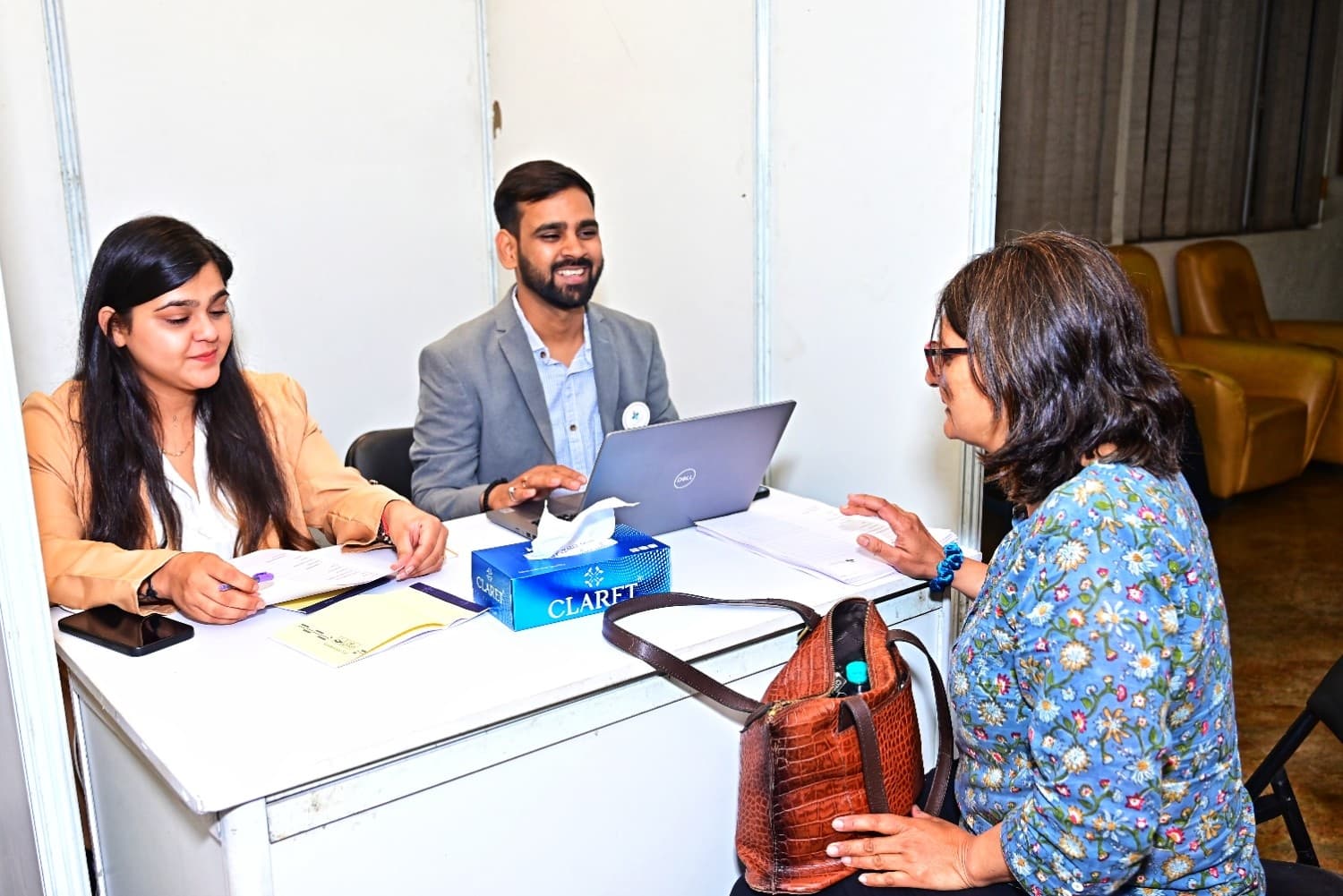
This is the core of reporting day, and it typically happens methodically, document by document, rather than as a quick glance. Officials at the verification committee check your original documents against your MCC counselling record and your allotment letter, confirming everything lines up — your NEET admit card and scorecard, Class 10 and 12 marksheets and certificates, Transfer Certificate, Migration Certificate, and Study/Conduct Certificate.
A few things happen here specifically:
- Your category or reservation certificate gets cross-checked for validity, including the financial-year issuance rules for OBC-NCL and EWS certificates covered in our earlier guide — this is a common point where otherwise eligible candidates get flagged if their certificate's date or wording doesn't meet current requirements.
- Your name across every document gets checked for consistency, which is exactly why the name-mismatch affidavit process, also covered separately, matters so much if your documents carry even minor spelling variations.
- You submit your photocopy set (the self-attested copies covered in our reporting checklist guide) alongside the originals — the committee retains this set while handing your originals back temporarily or holding them for forwarding to the university, depending on the college's specific process.
If a non-critical document like your Transfer Certificate genuinely isn't ready yet, this is the point where you'd typically be offered provisional admission with a signed undertaking to submit it within a specified window, commonly 7 to 10 days.
Step 3: Biometric And Identity Verification
At many institutions, document scrutiny is paired with a formal identity check that goes beyond simply glancing at your face against a photo. This commonly takes the form of biometric fingerprint and photo verification, matched against your original NEET registration data. The process is treated seriously: if there's a mismatch between your biometric data and your registered identity, you may not be permitted to proceed with counselling or admission at all. This step exists specifically to prevent impersonation — ensuring the person physically reporting is genuinely the same person who sat for NEET and was allotted the seat.
Step 4: Issuance Of A Provisional Admission Letter
Once document scrutiny and biometric/identity verification both clear, many institutions issue a provisional admission letter at this stage — a formal acknowledgment that your documents and identity have checked out, even though your admission isn't yet fully final. This matters because the next two steps — medical fitness and fee payment — still need to be completed before your admission is considered complete. Think of the provisional letter as confirmation that you've cleared the paperwork and identity hurdles, not as the finish line itself.
Step 5: Fee Submission Via Demand Draft (or Electronic Transfer)
With documents and identity confirmed, you move to fee payment, and this is where the Demand Draft protocols covered in our earlier reporting guide come into direct play:
- Demand Drafts must be made out exactly as the institution specifies — correct payee name, correct payable city — since an incorrectly worded DD typically can't be corrected on the spot.
- Many colleges require separate DDs for tuition/admission fees versus hostel and mess fees, so check this distinction before you arrive rather than discovering it at the payment counter.
- Electronic transfer via RTGS/NEFT is often accepted as an alternative, with your UTR number serving as proof — but as covered in our banking protocols guide, make sure your account's transaction limit can actually handle the amount before you try this on reporting day itself.
- Some institutions specifically require fee payment in cash at this stage rather than through a draft, particularly for the immediate course fee component — so confirm your specific college's accepted payment method in advance rather than assuming DD or electronic transfer is universally expected.
- Fee payment is generally where the day's real deadline pressure concentrates — failing to complete payment by the specified cut-off time on the reporting day can result in your seat being treated as vacant and reported back to the counselling authority for reallocation, regardless of how smoothly your document verification went.
Step 6: Medical Fitness Examination By The Institutional Medical Board
This step can happen either on the same day as document verification and fee payment, or — at institutions handling a high volume of candidates — on a second day entirely, following a structured multi-day reporting sequence. A few important details about how this specific step works:
- The medical fitness certificate you brought from your own registered MBBS/MD doctor is not necessarily the final word. Many institutions conduct their own, independent medical examination on campus, regardless of whether you've already submitted a valid certificate — this is a mandatory check at several major institutions, not an optional formality.
- The examination is conducted by the institution's own Medical Board, and candidates found medically fit are cleared to proceed with admission; a finding of medical unfitness at this stage is a serious outcome that can affect whether your admission is finalised at all.
- This step tends to take real time. Document verification and medical testing combined can genuinely extend into a second day at busier institutions — don't assume you'll be done within an hour or two if your college processes a large incoming batch.
Step 7: Anti-Ragging Affidavits And Other Declarations
Alongside or shortly after the medical examination, you'll typically complete the anti-ragging affidavit process — commonly required from both the student and a parent or guardian separately, often on prescribed stamp paper, as covered in our earlier reporting checklist. Some institutions also require a compulsory government bond affidavit or other quota-specific declarations at this stage, depending on your admission category.
Step 8: Hostel Formalities (If Applicable)
If you're opting into hostel accommodation, this is usually handled as a distinct sub-process within the same reporting visit, often with the hostel administration operating somewhat separately from the main admissions desk. As covered in our hidden-charges guide, hostel and mess fees are frequently collected through a separate payment from your core admission fee, so budget and document for this as its own line item rather than assuming it's bundled into your primary DD.
Step 9: Final Confirmation, ID Card, And Orientation
Once documents, identity, fee payment, and medical fitness have all cleared, your admission moves from provisional to confirmed. At this point, institutions typically issue your student ID card and register you into the campus's biometric attendance system, which you'll use going forward for daily attendance tracking. Some colleges fold a brief orientation session into this final stage, introducing incoming students to faculty, campus facilities, and academic expectations before the day concludes.
A Realistic Example: The Two-Day Structure At Larger Institutions
Busier institutions sometimes spread this entire sequence across two days rather than trying to complete everything in one sitting — a structure worth anticipating if you're reporting to a high-volume institute:
- Day 1 typically covers document verification, registration, and biometric/identity checks.
- Day 2 typically covers the medical examination and fee payment.
If your college follows this pattern, don't assume reporting is a single-visit event — check your specific allotment communication for whether a multi-day schedule applies, and plan your travel and accommodation near the college accordingly, rather than expecting to complete everything and leave within hours.
What Happens If Something Goes Wrong at Any Step?
A few realistic scenarios worth knowing in advance:
- A document discrepancy at the verification desk — a name mismatch, an expired category certificate, a missing non-critical document — typically gets handled through the specific remedies covered in our earlier guides: a notarised affidavit for name mismatches, a fresh certificate for OBC-NCL/EWS timing issues, or a signed undertaking for a delayed TC/migration certificate.
- A biometric or identity mismatch is treated far more seriously, and candidates generally cannot proceed with admission until this is resolved, since it goes to the fundamental question of whether you're genuinely the allotted candidate.
- A rejected or incorrectly worded Demand Draft usually cannot be fixed on the spot, so most colleges won't accept a corrected version brought later in the same day if the deadline has passed — this is exactly why getting your DD details precisely right before you travel to the college matters so much.
- A medical fitness concern flagged by the institutional board can delay or jeopardise your admission, and this is generally handled through the institution's own specific medical appeal or reassessment process, if one exists, rather than something you can resolve informally at the counter.
- Missing the reporting or payment cut-off time entirely generally results in your seat being treated as vacant and reported back to the counselling authority — this is the single most unforgiving consequence of the entire day, since there's typically no informal extension available.
A Quick Sequence Summary
- Arrive within your reporting window and join the verification queue.
- Document scrutiny — originals checked against your MCC record and allotment letter.
- Biometric and identity verification — fingerprint and photo matched against your registration data.
- Provisional admission letter issued once documents and identity are cleared.
- Fee submission — via correctly worded Demand Draft, electronic transfer, or cash, depending on the institution's specific requirement.
- Medical fitness examination by the institutional Medical Board, sometimes on a separate day.
- Anti-ragging affidavits and any other required declarations.
- Hostel formalities and payment, if applicable.
- Final confirmation, ID card issuance, and biometric attendance registration.
FAQs
What is the first step when I arrive for physical reporting?
Joining the verification queue within your specified reporting window, with your original documents and photocopies organised and ready for scrutiny.
What exactly do officials check during document scrutiny?
Your original documents against your MCC counselling record and allotment letter, including academic certificates, category/reservation certificates, and consistency of your name across all documents.
Is biometric verification part of reporting day?
Yes, many institutions conduct fingerprint and photo verification matched against your original NEET registration data, specifically to prevent impersonation.
What is a provisional admission letter, and when is it issued?
It's issued once document verification and biometric/identity checks clear, confirming you've passed those stages, though your admission isn't fully final until fee payment and medical fitness are also completed.
Will my own doctor's medical fitness certificate be accepted without further checks?
Not necessarily — many institutions conduct their own independent medical examination on campus regardless of a valid certificate you've already submitted.
Does the medical examination happen on the same day as document verification?
It can, but at busier institutions, it's often scheduled for a separate day as part of a structured multi-day reporting sequence.
Is hostel fee payment handled separately from my main admission fee?
Generally yes, hostel and mess fees are frequently collected as a distinct payment from the core admission fee, often with their own separate Demand Draft.
What if a non-critical document like my Transfer Certificate isn't ready on reporting day?
Most colleges offer provisional admission with a signed undertaking to submit it within a specified window, commonly 7 to 10 days.
The Bottom Line
Reporting day isn't one single event — it's a sequence of distinct checkpoints, each capable of stalling your admission if approached unprepared: document scrutiny, biometric identity verification, a provisional letter, fee payment with exact DD protocols, an institutional medical examination that doesn't necessarily accept your own doctor's certificate at face value, and a set of mandatory affidavits before everything is finally confirmed. Knowing this sequence in advance — and preparing for each step specifically rather than treating the whole day as one vague formality — is what separates a smooth, single-visit admission from a stressful, multi-day scramble during UG counselling.
Reviews
No reviews yet. Be the first to write one!