Name Discrepancies And Affidavit Errors: How To Fix Document Mismatches Before Verification In NEET PG Counselling
Nishat
 WhatsApp
 Email
 Facebook
 Twitter/X
 LinkedIn
Table of Contents
Predict Your Rank Now
Enter your NEET score to get an estimated rank
Find the Best Colleges For You
Based on your NEET rank, Category & more

Get Your Dream Medical College
Secure your seat with expert counselling
Introduction
Dr. Meera has a great rank. She has paid her fees, filled her choices and received her seat. Then comes document verification, and the officer says something she never expected: "Madam, your name on the MBBS certificate is different from your NEET PG scorecard."
It is a tiny difference. One document says "Meera K. Sharma" and another says "Meera Kumari Sharma." In her mind, it is obviously the same person. On paper, it is a mismatch.
Stories like this happen every counselling season. Brilliant doctors, strong ranks and a tiny spelling problem that suddenly feels like a mountain. The good news is that most document mismatches can be fixed if you spot them early and handle them calmly. This guide will walk you through it in simple language, the way a patient senior would explain it over a cup of chai.
Why Do Document Mismatches Matter So Much?
Verification is the point where authorities make sure you are indeed who you claim to be, along with your classification, ranks, and qualifications.
Your name is the common link among all the documents, including your NEET PG scorecard, MBBS degree, internship certificate, registration certificate, and identity proof.
If this link is lost, the verification official will not understand if the documents belong to the same person. It is nothing personal, rather a safety measure against fraud and impersonation. However, it puts your seat in jeopardy if you don’t explain or correct the inconsistency in time.
You can imagine the situation as a lock and key system. If the shape of the key is a bit different, you will be unable to unlock the door. Your task is to ensure that every key matches.
The Most Common Types Of Mismatches
Before fixing a problem, you need to recognise it. Here are the mismatches that trouble doctors most.
Spelling differences. "Priyanka" versus "Priyanca," or "Mohammed" versus "Mohammad."
Initials versus full name. "R. Kumar" on one document and "Rajesh Kumar" on another.
Order of names. "Sharma Meera" on one and "Meera Sharma" on another.
Missing or extra middle names. One document includes a middle name, and another leaves it out.
Surname changes after marriage. Your degree may carry your maiden name, while your newer documents show your married name.
Father's or mother's name differences. Spelling, initials or even the name itself may vary between documents.
Date of birth differences. Different dates across school records, ID proofs, and exam forms.
Gender or title mismatches. Rare, but possible in older records.
Category certificate mismatches. Your name or parent's name on the certificate may not match your other documents.
Photograph and signature differences. A photo that looks very different, or a signature that varies a lot between documents.
Make a list of every document you will submit and compare each of these details side by side. You may find a small issue you never noticed.
Step 1: Do A Full Document Audit Early?
Do not wait for the verification date. As soon as the counselling schedule is announced, sit down with all your documents and check them carefully.
Make A Simple Comparison Table
Create a table in a notebook or spreadsheet with these columns:
- Document name
- Your name as printed
- Father's name as printed
- Mother's name as printed (if mentioned)
- Date of birth
- Any other detail, such as category or registration number
Fill it for each document: NEET PG scorecard, admit card, MBBS degree, mark sheets, internship certificate, medical council registration, Aadhaar or other ID proofs, passport, category or EWS certificate, and domicile certificate.
When you look at all of them in one place, the mismatches jump out at you.
Decide Which Document Is Your "Anchor"
Usually, your MBBS degree or the main identity document accepted in the bulletin acts as the reference. Your other documents should be consistent with it, or you should have a clear, legal route to explain the differences. Check the official instructions to see which documents are considered most important for name verification.
Step 2: Read What The Official Bulletin Actually Says
Do not rely on a friend's experience from a previous year. Rules change, and what was accepted before may not be accepted now.
When you read the bulletin, look for:
- The list of documents required for verification
- Any specific instructions on name differences
- Whether an affidavit is allowed, and in what format
- Whether a gazette notification or other legal proof is required in some situations
- Rules about the validity, stamp paper value and notarisation of affidavits
- Deadlines for submitting corrected documents
If something is unclear, contact the official helpdesk early and keep a record of the reply. Early questions are always easier to answer than last-minute emergencies.
Step 3: Fix The Problem At Its Source If Possible
The cleanest solution is to correct the wrong document with the authority that issued it. Depending on the type of mismatch, this might mean contacting:
- Your medical college or university, for degree or marks card corrections
- The medical council, for registration certificate corrections
- The authority that issued your identity proof
- The office that issued your category or domicile certificate
- The exam conducting body, if the error is in the scorecard or admit card and a correction route is available
Corrections take time, sometimes weeks. That is why starting early is so important. If a full correction is not possible before verification, ask whether a supporting document, such as an affidavit or other proof, can be accepted as an interim solution, as per the official rules.
Step 4: Understand What An Affidavit Is And When It Helps
An affidavit is defined as an official declaration made under oath in written form that can be prepared on stamp paper and authenticated through an attestation or notarisation. In case of a situation of name discrepancies, it is used for proving that different spelling or forms of a name refer to the same individual. But an affidavit cannot be considered a miraculous solution and only works in situations when accepted and recognised by the relevant authorities as a valid document. In some cases, there could be necessity in a stronger evidence, such as a gazette notification on change of name. Thus, it is always advisable to check the topic in the relevant bulletin or ask a helpdesk employee whether an affidavit will prove to be useful.
Step 5: Draft A Correct Affidavit
An affidavit with errors can create a second problem on top of the first one. Here is how to avoid that.
What A Good Affidavit Usually Includes?
- Your full name as it appears in each relevant document
- Your father's or mother's name, as needed
- A clear statement that the different names or spellings refer to the same person
- Mention of the specific documents where the difference appears, with their numbers where relevant
- Your address and identification details
- A declaration that the information is true
- Date, place, and your signature
- The stamp paper, notary seal and signature, as required
Common Affidavit Mistakes
Typing errors in the affidavit itself. If your name is misspelt in the affidavit, you have created a new mismatch. Proofread every letter, again and again.
Wrong stamp paper value. The required value can differ by state. Check what is acceptable and what the bulletin asks for.
Missing notary signature or seal. An unattested affidavit may be rejected.
Old or undated affidavit. Some processes expect a recent date. Read the validity rules.
Not mentioning all the mismatches. If there are three differences, cover all of them clearly, not just one.
Using a random template from the internet. Templates can be a useful starting point, but adapt the content to your exact documents and the official format, if one is given.
Not carrying the original. Photocopies are usually not enough. Keep the original ready for verification, along with extra copies.
If you are unsure, take your documents to a lawyer or a notary and ask them to draft it correctly. A small fee at this stage can save you a lot of trouble.
Step 6: Special Situations Explained
Name Change After Marriage
Many doctors change their surname after marriage. Your degree and early documents may carry the maiden name, while newer documents carry the married name. The commonly accepted supporting proof can include a marriage certificate, a gazette notification, or an affidavit, depending on the rules in force. Check what the current bulletin accepts, and prepare it well in advance.
Legal Change Of Name
If you have legally changed your name, a gazette notification or similar official proof is often the strongest evidence. Keep both the original documents and the notification ready, along with any affidavit the process asks for.
Spelling Variations
Small variations, such as one letter or a different transliteration, are often handled with an affidavit and a clear explanation. But some authorities may ask for stricter proof, so confirm in advance.
Initials Versus Full Name
If one document shows initials and another shows the full name, an affidavit or a supporting identity document can often clarify the connection. Check the rules on what is acceptable.
Parent's Name Differences
Mismatches in a parent's name can be tricky because they affect category certificates, domicile, and identity. Try to correct the source document first, and keep supporting proof such as school records or identity documents ready.
Category Certificate Mismatch
Your category certificate is crucial for reservation benefits. Any name or parent-name mismatch can put your category claim at risk. Contact the issuing authority early for corrections, and make sure the certificate follows the required format and validity in the bulletin.
Date Of Birth Mismatch
Date of birth is usually taken from your school records or other primary documents. If other documents differ, you may need a correction from the relevant authority. An affidavit alone may not be enough in this case, so check the rules carefully.
Step 7: Keep Your Verification File Perfectly Organised
On the day of verification, a tidy file reduces stress and shows the officer that you are well prepared.
Keep ready:
- Original documents in one folder, in the order mentioned in the bulletin
- Self-attested photocopies, if required
- Extra photocopies of every document, just in case
- Passport-size photographs as asked
- The affidavit in original, along with copies
- Supporting proof such as a gazette notification or marriage certificate, if relevant
- Printed copies of your counselling registration, allotment letter and fee receipts
- Digital copies on your phone or a pen drive as backup
Label each section clearly, and put a small sticky note on any document that has a mismatch, with a note of the supporting proof attached. This helps you explain quickly and calmly.
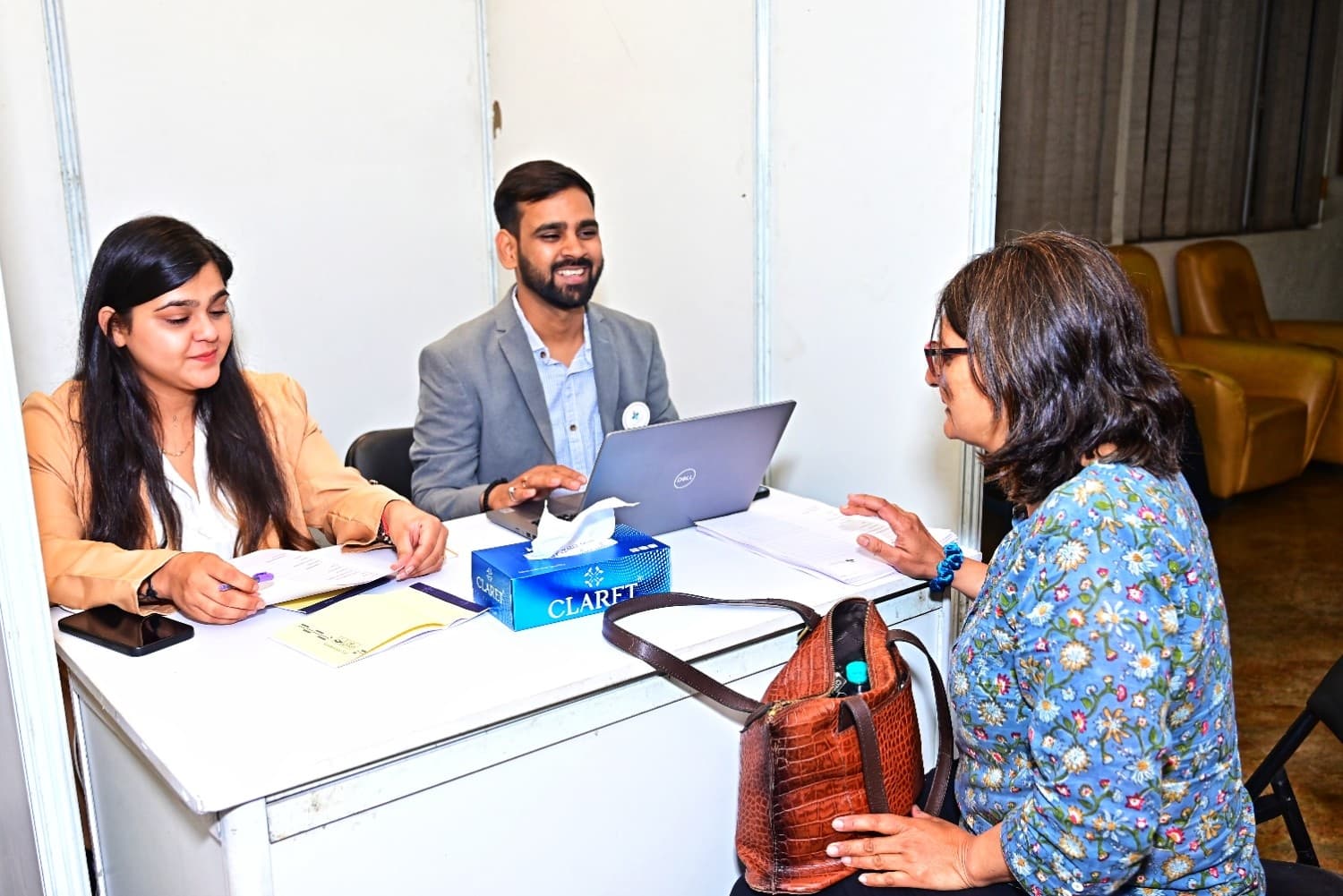
Step 8: Be Calm And Clear At The Verification Desk
If an officer points out a mismatch, take a breath. It is a routine part of the process, not an accusation.
- Greet politely and listen carefully.
- Explain the difference simply: "This is my name as per the degree, and this is as per my scorecard. Both refer to me. Here is my affidavit and supporting proof."
- Show the supporting documents calmly and in order.
- If you are asked to submit something additional, ask for the exact requirement and the deadline in writing, if possible.
- Take note of the name or ID of the person who guided you.
- Do not argue. A respectful tone often gets you much further.
If the issue cannot be resolved on the spot, ask what the next step is and how much time you have. Then act immediately.
What If You Discover The Problem Late?
Sometimes the mismatch is found just before or even at verification. Do not panic. Here is a practical emergency plan.
- Read the official guidance again. Check whether any provision exists for such cases.
- Contact the helpdesk immediately, in writing if possible, and explain the issue clearly.
- Prepare an affidavit quickly, if it is accepted, with correct details and proper attestation.
- Collect supporting documents, such as old school records, ID proofs, or certificates showing both versions of your name.
- Request the authority that issued the wrong document for an urgent correction or a certificate that clarifies the difference.
- Ask about timelines. Find out the last date to submit corrected or additional documents.
- Keep records of every email, call, and receipt.
There is no guarantee in last-minute cases, so the earlier you act, the better.
Common Mistakes To Avoid
Even careful doctors slip here:
- Not checking all documents before the counselling window
- Assuming a small spelling difference will be ignored
- Using an affidavit with typing errors
- Relying on old rules or a friend's advice instead of the official bulletin
- Forgetting to carry original documents
- Getting the affidavit on the wrong kind of paper or without attestation
- Leaving corrections until the last week
- Ignoring mismatches in parents' names or dates of birth
- Not keeping extra copies of every document
- Losing calm and arguing at the verification desk
Every one of these mistakes is avoidable.
A Simple Checklist Before Verification
Keep this handy:
- List all your documents and compare names, parent names, and dates of birth.
- Highlight every mismatch.
- Read the official bulletin on accepted proofs and affidavit formats.
- Contact issuing authorities for corrections early.
- Draft the affidavit carefully and proofread it several times.
- Get proper stamp paper, notarisation and attestation as required.
- Collect supporting proof, such as a gazette notification or marriage certificate.
- Organise originals and photocopies in order.
- Keep digital backups of everything.
- Note all deadlines, and act well before them.
Taking Care Of Your Mind
Document problems can feel unfair, especially after months of hard work. You may feel angry at the system, or at yourself for not noticing earlier. Please be kind to yourself.
- Almost everyone faces some paperwork stress during counselling.
- Many mismatches are fixable with patience and the right papers.
- A calm, organised approach works better than panic.
- Talk to a trusted friend, senior, or family member who can help you with the running around.
- Take short breaks, eat and sleep properly. Paperwork is easier on a rested mind.
If the stress becomes overwhelming, speak to someone you trust or a mental health professional.
FAQs
What Is A Name Discrepancy In Document Verification?
It is a difference in the way your name, or your parent's name, appears across your documents. Examples include spelling differences, initials versus full names or a changed surname. Such differences can make it hard to confirm that all documents belong to you.
Will A Small Spelling Difference Be Accepted?
It may or may not be accepted, depending on the rules and the verifying authority. Do not assume it will be ignored. Prepare a supporting affidavit or proof, and confirm what is acceptable from the official bulletin or helpdesk.
What Is An Affidavit, And Why Is It Needed?
An affidavit is a written statement made on oath, usually on stamp paper and notarised. In name mismatches, it declares that different forms of a name refer to the same person. It is useful only if the authorities accept it for your situation.
Is An Affidavit Always Enough To Fix A Mismatch?
No. Some situations, such as a legal change of name, may need stronger proof like a gazette notification. Always check the official guidance on what is acceptable for your type of mismatch.
What Details Should Be Included In The Affidavit?
Generally, your full name as per each document, parent's name if relevant, a clear statement that the names refer to the same person, details of the documents concerned, your address, the date and your signature with notary attestation. Follow any format given in the official bulletin.
What Are The Most Common Affidavit Mistakes?
Typing errors in names, wrong stamp paper value, missing notary seal, an outdated date, not covering all mismatches and carrying only photocopies. Proofread carefully and verify the requirements before you get it notarised.
How Do I Fix A Name Change After Marriage?
Check which proofs are accepted, such as a marriage certificate, an affidavit or a gazette notification. Keep original documents and supporting proof ready, and confirm the requirement in the official bulletin well in advance.
What If My Category Certificate Has A Name Mismatch?
Contact the issuing authority as early as possible to correct it, because the category certificate affects your reservation claim. Make sure it meets the format and validity rules in the bulletin.
Should I Correct The Original Document Or Use An Affidavit?
Correcting the original document is usually the cleanest solution, but it can take time. If it cannot be completed before verification, ask whether an affidavit or other supporting proof can be accepted as per the rules.
Final Thoughts
A name mismatch looks small, but at the verification desk it can feel very big. The secret to handling it is simple: find it early, understand the rules, fix it at the source if you can and support it with correct proof if you cannot.
Check your documents today, not on the day before verification. Read the official notices carefully. Draft your affidavit with care. Keep your file neat. And remember that NEET PG Counselling is a long process in which a little preparation goes a very long way. You have worked hard for this seat. Do not let a spelling stand in your way. Sort your documents, take a deep breath, and walk into verification with confidence.
Wishing you smooth verification and a seat you are proud of.
Reviews
No reviews yet. Be the first to write one!