Medical Certificate & PwD Verification Guidelines for NEET Counselling: A Complete UG Counselling Guide for PwBD Candidates
Nishat
 WhatsApp
 Email
 Facebook
 Twitter/X
 LinkedIn
Table of Contents
Predict Your Rank Now
Enter your NEET score to get an estimated rank
Find the Best Colleges For You
Based on your NEET rank, Category & more

Get Your Dream Medical College
Secure your seat with expert counselling
Introduction
If you're a candidate with a benchmark disability preparing for UG counselling, there's one rule that catches more students off guard than any other: a disability certificate from your local hospital or district medical board will not get you a PwBD seat. Every year, capable candidates lose precious time — sometimes entire counselling rounds — because they assumed any government-issued disability certificate would work, only to discover MCC accepts certificates from a very specific, limited list of designated centres.
This guide walks through exactly how PwBD (Persons with Benchmark Disabilities) verification works for 2026, what's genuinely new this year, which centres are authorised, how long your certificate stays valid, and what the physical assessment process actually involves.
What Changed for 2026 — And Why It Matters?
This year brought the most significant overhaul to PwBD assessment in recent memory. The National Medical Commission notified new "Guidelines on Assessment of Persons with Benchmark Disabilities for Admission to the MBBS Course, 2026," and MCC issued a formal notice implementing them for NEET UG Counselling 2026.
The philosophy behind the assessment has shifted meaningfully. Where earlier processes leaned heavily on a raw disability percentage as the deciding factor, the new guidelines place greater emphasis on whether a candidate possesses the functional abilities needed to complete the MBBS curriculum and practise medicine safely — meaning assessment boards now evaluate functional competency, factoring in reasonable accommodation, assistive technology, and advances in rehabilitation science, rather than relying on a disability percentage alone.
In practical terms: two candidates with the same documented disability percentage could receive different outcomes depending on their actual functional capability and the accommodations available to them — this is a genuinely more individualised, competency-based approach than a simple cutoff-based system.
The Certificate Has a New Name and a Bigger Network
The document you'll need is now officially called the "Eligibility Certificate" — not simply a disability certificate — and it specifically determines a candidate's eligibility for MBBS admission based on functional assessment, not just disability documentation.
The network of centres authorised to issue it has also expanded dramatically. In the 2025 cycle, only 16 MCC-designated centres nationwide could issue this certificate. For 2026, that number has grown substantially — MCC's notice and related reporting place the count of designated Medical Assessment Boards somewhere between 61 and 65 centres across the country (exact figures have varied slightly across official communications, so always cross-check the current annexure). These typically include AIIMS centres, government medical colleges, and other state-run institutes, and each board has been directed to include at least one PwBD doctor or health professional as a member of the assessment panel.
This expansion matters practically: with more centres, candidates should theoretically have an easier time finding an accessible assessment location closer to home, though appointment slots still tend to fill up fast once counselling season begins.
Documents You Must Carry to the Assessment
Based on MCC's official notice, candidates must bring the following to their chosen designated Medical Assessment Board:
- NEET UG 2026 scorecard, demonstrating your eligibility for the MBBS course.
- A Permanent UDID (Unique Disability ID) card, issued by the Department of Empowerment of Persons with Disabilities (DEPwD) under the Ministry of Social Justice and Empowerment. This has become a mandatory requirement this year — a significant change from processes that previously accepted a wider range of disability documentation.
- A self-certified affidavit declaring your functional abilities, in the format prescribed under Schedule-I, which the Medical Assessment Board verifies during the assessment itself.
- A Self-Certification Affidavit (Appendix-A), along with a disability-specific affidavit matching your particular category, in the prescribed NMC format found in Appendices B through F.
An important clarification followed shortly after the main notice: candidates holding only a temporary UDID card or disability certificate will not be automatically rejected, provided their disability is classified as progressive, non-progressive, or not likely to improve. However, if a candidate's temporary certificate specifically records their condition as "likely to improve," the Medical Assessment Board will conduct a fresh reassessment before deciding eligibility — so a temporary certificate doesn't disqualify you outright, but it can trigger extra scrutiny depending on how your condition is documented.
How the Physical Assessment Actually Works?
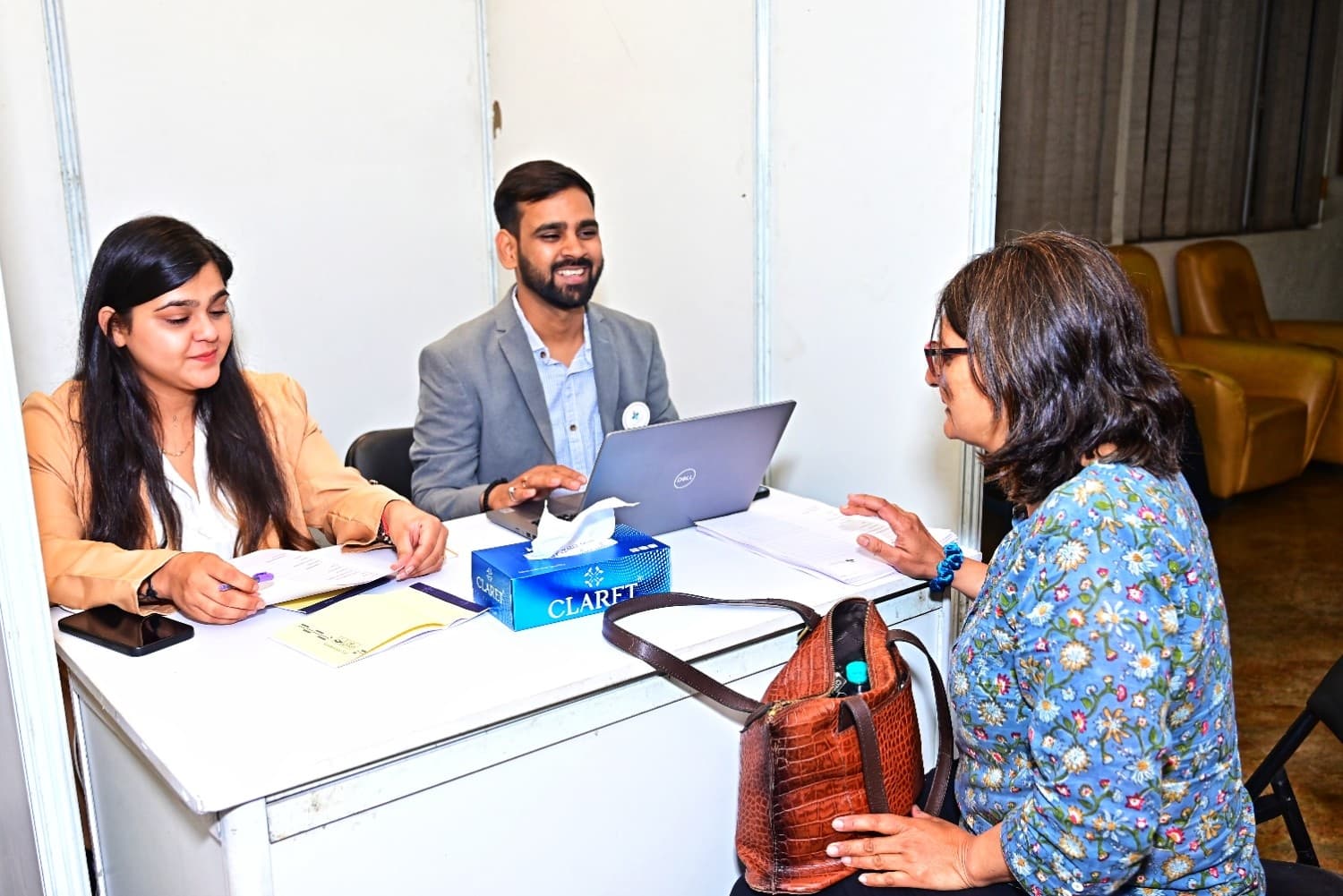
Unlike much of this year's counselling process — which MCC has moved toward online document verification and one-time physical reporting for general candidates — PwBD certification still requires an in-person visit to a designated assessment centre. Here's the general flow:
- Choose a designated Medical Assessment Board from MCC's official annexure list (or, if you're targeting your state's 85% quota specifically, your state's own designated medical assessment board).
- Carry all required documents listed above to your appointment.
- Undergo physical assessment, where the board verifies your functional abilities against the affidavit you've submitted and your UDID card details, in line with the 2026 NMC guidelines' competency-based approach.
- The board generates your Eligibility Certificate based on the disability details in your UDID card and the affidavit submitted, subject to you meeting the eligibility criteria.
- Only candidates who've obtained this certificate will be shown PwBD seat options when they reach the choice-filling stage of counselling — without it, the PwBD category simply won't appear as a selectable option for you.
If disputes arise over an assessment outcome, an Appellate Board process exists — its decision is communicated to MCC, with a copy sent to the Directorate General of Health Services (DGHS), after which the candidate proceeds with counselling based on that outcome.
Certificate Validity: A Detail That Trips Up Repeat Candidates
Here's something every PwBD candidate should know clearly: the Eligibility Certificate is valid only for that specific academic counselling session. It does not carry forward to a future year. If you take a drop year, or if you didn't secure a seat in one cycle and plan to try again the next year, you will need to undergo the assessment process afresh and obtain a new Eligibility Certificate for that year's counselling — your previous year's certificate won't be accepted.
This makes timing genuinely important. Candidates are strongly advised to begin the assessment process as early as possible, rather than waiting until counselling registration opens, because appointment slots at designated centres can fill up within days once the counselling season is underway.
AIQ vs. State Quota: Where You Get Assessed Can Differ?
- For All India Quota (15% AIQ) and central institute seats, you must obtain your Eligibility Certificate specifically from one of MCC's designated Medical Assessment Boards — a certificate from any other source, including a state or district hospital, will not be accepted.
- For the 85% State Quota, candidates can approach their relevant state medical assessment boards instead. However, this doesn't mean state boards operate under looser standards — the evaluation still has to be conducted in accordance with the NMC's 2026 guidelines, meaning the same functional-competency framework applies regardless of which board conducts your assessment.
- If you're pursuing both AIQ and your state's quota simultaneously — which most serious candidates do — you may need to get assessed at both an MCC-designated centre and your state's designated board separately, since one board's certificate generally doesn't automatically transfer authority to the other counselling stream.
The Reservation Framework Behind All This
For context on why this certification matters so much: candidates need a minimum of 40% benchmark disability as defined under the Rights of Persons with Disabilities (RPwD) Act, 2016, to qualify under the PwBD category at all. Meeting this 40% threshold is necessary but not sufficient on its own — the NMC's guidelines maintain separate rules on which specific disabilities and severity ranges are considered compatible with safely pursuing and practising the MBBS course, which is exactly why the functional assessment step exists rather than a simple percentage-based cutoff. Eligible candidates who clear the full process typically receive a 5% horizontal reservation across applicable seats.
What Happens If You Submit False Documentation?
MCC's notice is unambiguous and severe on this point: if a candidate's submitted UDID card or affidavit is found to be fake, the allotted seat will be cancelled outright, and legal action will be initiated against the candidate. This isn't a soft warning — fabricated disability documentation is treated as a serious offence, not a paperwork technicality, so this is not a category where any shortcuts should be attempted.
A Practical Checklist Before You Begin
- Start early — don't wait for counselling registration to open. With expanded but still limited centres, appointment slots fill quickly once the season begins.
- Get your Permanent UDID card in order well in advance, since it's now a mandatory document; if you only hold a temporary one, understand how your specific condition is classified on it, as this affects whether reassessment is triggered.
- Prepare the correct affidavits — Schedule-I for functional abilities, Appendix-A for self-certification, and the specific Appendix (B through F) matching your disability category — rather than assuming a generic disability declaration will suffice.
- Confirm whether you need separate assessments for AIQ and your state quota, and plan visits to both an MCC-designated board and your state's board if you're pursuing both tracks.
- Remember the certificate expires with the academic session — if you're reattempting counselling in a future year, budget time to go through the entire assessment process again.
- Never submit fabricated or exaggerated documentation — verification is taken seriously, and the consequences (seat cancellation plus legal action) are severe.
FAQs
Can I use a disability certificate from my local or district hospital for NEET counselling?
No, not for AIQ seats — MCC only accepts Eligibility Certificates issued by its own designated Medical Assessment Boards, not certificates from general hospitals.
What is the "Eligibility Certificate" in NEET counselling?
It's the official document issued by an MCC-designated Medical Assessment Board that determines a candidate's eligibility for MBBS admission under the PwBD category, based on functional assessment rather than disability percentage alone.
How many designated assessment centres are there for 2026?
The number has expanded significantly from 16 centres in 2025 to somewhere between 61 and 65 centres in 2026, though the exact figure should be confirmed against MCC's current official annexure.
Is a UDID card mandatory for PwBD certification in 2026?
Yes, a Permanent UDID card issued by the DEPwD is now a mandatory document for the assessment process.
What if I only have a temporary UDID card?
You won't be automatically rejected if your disability is classified as progressive, non-progressive, or not likely to improve, but you may face reassessment if your certificate records the condition as "likely to improve."
How is the 2026 assessment different from earlier years?
It shifts focus from disability percentage alone to functional competency — whether you can safely complete the MBBS curriculum and practise medicine, considering reasonable accommodation and assistive technology.
Can I get assessed at any state medical board for AIQ seats?
No, AIQ and central institute seats specifically require certification from an MCC-designated Medical Assessment Board.
Do I need separate assessments for AIQ and state quota seats?
Generally yes, since a certificate from an MCC-designated board is for AIQ, while state quota PwBD seats require assessment from your state's own designated medical board, both following NMC's 2026 guidelines.
Will I be shown PwBD seat choices without an Eligibility Certificate?
No, only candidates who've obtained the certificate from a designated centre will see PwBD seat options during choice filling.
The Bottom Line
The 2026 overhaul of PwBD assessment reflects a genuine shift toward fairness — evaluating what a candidate can actually do rather than reducing their eligibility to a single percentage number — but that shift comes with more procedural steps, not fewer. Between the newly mandatory UDID card, the expanded but still finite network of designated assessment centres, and a certificate that resets every academic year, the margin for last-minute scrambling has gotten smaller even as the system has gotten fairer. Start your assessment early, get every affidavit in the correct prescribed format, and always verify your centre against MCC's current official annexure before you book an appointment — this is one part of UG counselling where being early genuinely protects your seat.
Reviews
No reviews yet. Be the first to write one!